
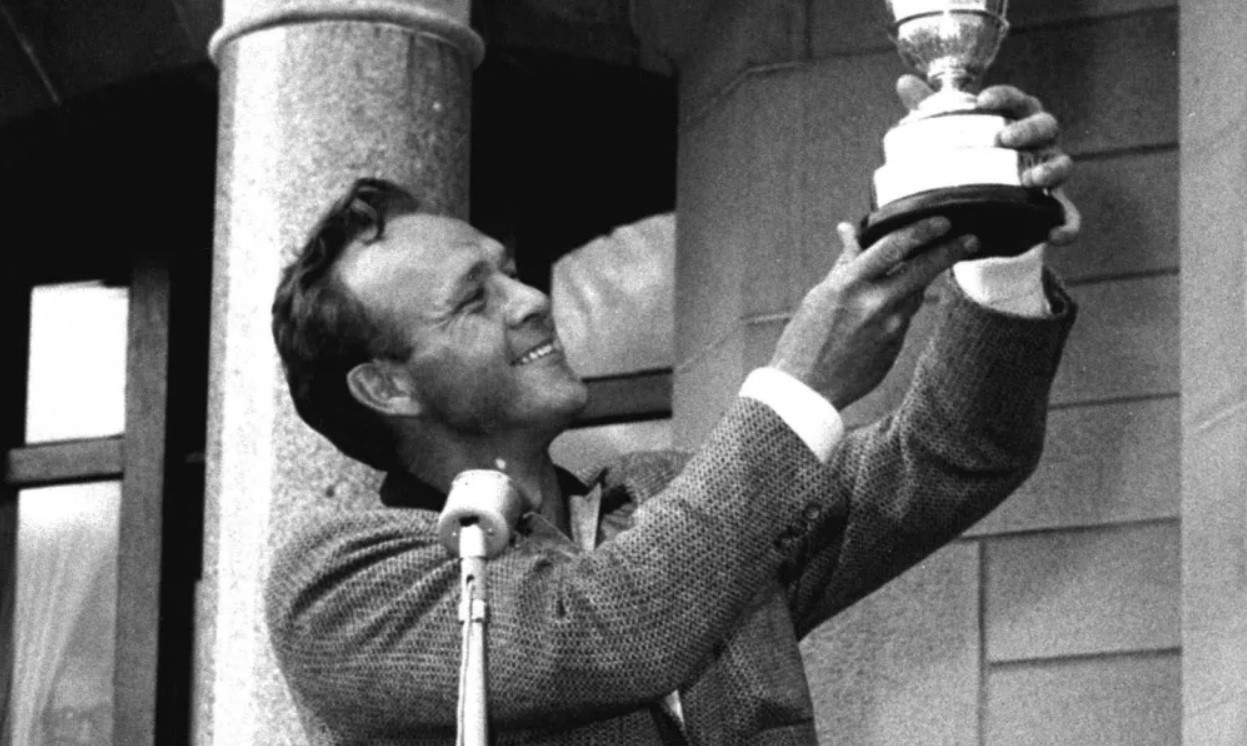
Reflecting on the monumental achievements in golf, the 1962 British Open emerges as a pinnacle event, showcasing Arnold Palmer’s formidable prowess. With his powerful forearms and dynamic lashing swing, Palmer not only captivated audiences but also set a high standard at Royal Troon, a course noted for its rigorous challenges and distinctive attributes.
Palmer’s Strategic Mastery Over Tough Conditions
Royal Troon, recognized for its challenging layout and inclement weather, demands high precision and resilience. During the memorable 1962 British Open, the conditions of the course, coupled with Palmer’s strategic play, were pivotal. His ability to adapt his powerful swing to the wind’s capricious nature highlighted his mastery, reaching greens in significantly fewer strokes than his competitors. Such strategic adaptability to the ever-changing British Open conditions was key to his triumph.
Impact of Wind on Gameplay at Royal Troon
The influence of wind at Royal Troon cannot be overstated, transforming benign holes into formidable challenges. Known for shifting directions, the wind alters the play approach dramatically, from reducing the number of required strokes on a downwind pass to increasing them when facing the headwind. This variability in wind patterns tests the players’ adaptability and forethought in club and shot selection.
Comparison of Royal Troon to Other British Open Courses
While Royal Troon shares similarities with other British Open venues, especially with its fescue roughs designed to challenge rather than forgive, it also boasts unique features that set it apart. The roughs, akin to traditional British courses, start becoming denser, adding an extra layer of challenge as opposed to merely penalizing errant shots.
The Postage Stamp Hole
The Postage Stamp, the par-3 eighth hole at Royal Troon, stands out not only for its brevity but also for its precision requirement. Surrounded by bunkers, the hole might seem deceptively simple but demands utmost precision and control, characteristics that Palmer exploited brilliantly during his rounds.
The Railway Hole
Often regarded as a formidable test, the Railway hole, or the par-4 11th, features a railway line hazard along its right side, contributing to its reputation as one of the most challenging holes. Gorse and other natural obstacles demand strategic foresight and accurate driving, facets that have historically tripped up many competitors.
Decoding Victories: The Historical Perspective and Player Adaptation
The analysis of historical performances at Troon, particularly focusing on American players like Arnold Palmer, reveals patterns of successful adaptations to its distinctive challenges. Since Palmer’s victory, the course has witnessed several remarkable bouts, all highlighting how crucial understanding and adapting to Troon’s unique aspects are for clinching the title.
Frequently Asked Questions (FAQs):
What made Arnold Palmer’s swing effective at Royal Troon?
Arnold Palmer’s swing, enhanced by his powerful forearms, allowed him to drive the ball long distances, effectively managing the lengthy par-4s and par-5s, crucial for conquering Troon’s demanding layout.
How does wind affect gameplay at British Open courses like Royal Troon?
Wind significantly alters strategic approaches in British Open courses, necessitating real-time adjustments to both club selection and shot type, pivotal in navigating the courses successfully.
What are the distinctive features of Royal Troon?
Royal Troon is famed for its challenging holes like The Railway and The Postage Stamp, each requiring unique strategies to navigate effectively.
Leave a Reply