
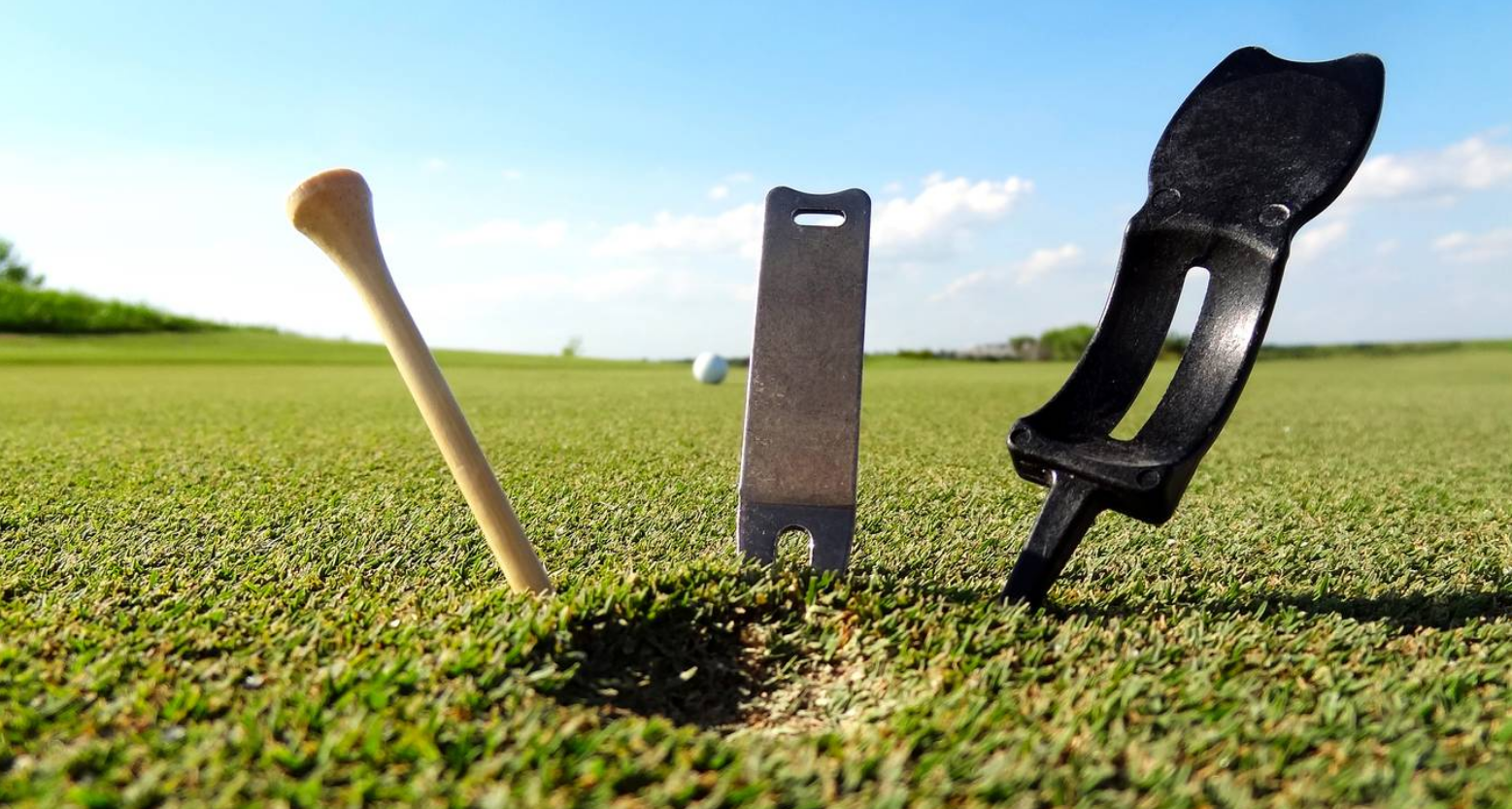
When it comes to fixing ball marks on the golf course, there is no shortage of opinions on the best method. Just like different swings can yield the same results, so too can different approaches to ball-mark repair achieve the desired outcome. While some may argue for a conventional technique sanctioned by the USGA, others have found success with alternative methods. This article explores the various approaches to ball-mark repair and the considerations golfers should keep in mind.
The Conventional Method: Using a Divot-Repair Tool
The USGA-approved method for ball-mark repair involves utilizing a divot-repair tool or any other pointy object, such as a tee or pencil. The process begins by inserting the tool into the ground at the backside of the mark and gently pulling the turf towards the middle, evenly distributing it to fill in the crater. The final step is to lightly tamp down on the repaired mark with a putter. This method has long been considered effective and widely recognized as the standard approach.
Augusta National’s Unique Approach
Augusta National Golf Club, known for its meticulous care of the course, has a distinctive method for repairing ball marks. PGA Tour veteran Ben Crane brought attention to their approach by posting a video on social media. Instead of starting at the backside of the mark, they insert a tee in the center and work outward. The question arises: if it’s good enough for Augusta, is it the best approach?
An Expert’s Perspective
Jim Myers, a member of the Golf Course Superintendents Association of America and superintendent at Columbia Edgewater Country Club, shares his admiration for the Crane/Augusta method. Myers stresses the importance of effective ball-mark repair, especially during the winter when the turf takes longer to recover. However, he also acknowledges that golfers who opt for the traditional method are not in the wrong. The key, according to Myers, is to avoid tearing the roots, as this can impede the grass’s ability to heal.
Considering Turf Types and Time of Year
Mark Patterson, a veteran superintendent in Florida, acknowledges that different approaches to ball-mark repair may yield varying outcomes depending on turf types and the time of year. With Bermuda greens that thrive throughout the winter, Patterson believes that almost any method can be effective. However, during stressful times, he advises golfers to be mindful of minimizing damage.
Frequently Asked Questions
What divot-repair mistakes do golfers commonly make?
Golfers often make the following divot-repair mistakes, according to a superintendent:
- Not using a divot-repair tool or any suitable object to fix ball marks
- Pulling up and tearing the roots, leading to damaged grass
- Ignoring the importance of repairing ball marks during the winter
Should I start repairing a ball mark from the center or the backside?
Both methods have their merits, and the choice ultimately depends on personal preference. Starting from the center, as demonstrated by Augusta National, can effectively repair the ball mark, while the conventional method of starting from the backside is widely accepted and recommended by the USGA.
Are there different ball-mark repair methods for different turf types?
While certain methods may better suit specific turf types, the general consensus among experts is that various approaches can be successful regardless of the turf. During periods of stress, it is advised to minimize damage and opt for less invasive ball-mark repair methods.
Remember, the goal of ball-mark repair is to ensure the green’s optimal health and recovery. So, regardless of the approach you choose, taking action is better than neglecting the repair altogether.
Leave a Reply