
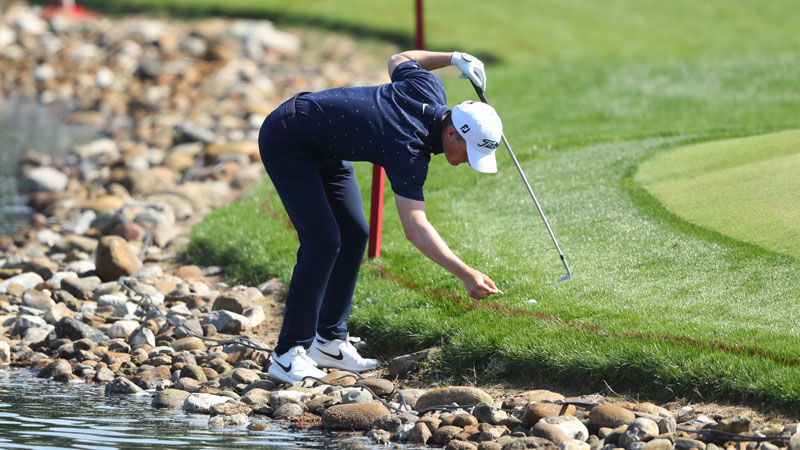
Hitting over water on the golf course can be intimidating, but with the right game plan and understanding of the fundamentals, it can be easy.
To help you gain confidence and avoid putting your ball in the drink, here are 10 tips to help you clear the water and see your ball soar to safety.
1. Focus On Your Target
Instead of fixating on the hazard, focus on where you want the ball to land. By being more focused on your target, you can increase your chances of hitting the shot you want and boost your confidence.
2. Know the Carry Distance
While most golfers focus on the yardage to the pin, it’s also important to know the distance you need to carry the hazard. This will help you choose the right target and club for the shot.
3. Choose the Right Club
With your club selection, you should always choose one that can clear the water even if you don’t hit it perfectly. This takes the pressure off of hitting a hero shot and provides more margin for error.
4. Understand Carry Distance With Each Club
Many amateurs don’t know the carry distance with each of their clubs. It’s recommended to work with a professional or use a launch monitor to determine the exact distances with every club you own.
5. Consider Lofted Hybrids or Fairway Woods
Lofted hybrids or fairway woods, like a 7-wood, are the clubs to go for for carrying water. Lesser lofted clubs may travel farther in total distance due to roll, but they might not clear the hazard.
6. Focus On Hitting the Ground
The bottom of your club needs to hit the ground to maximize launch and allow the ball to make contact with the sweet spot. Practice swinging with the intention of hitting the ground to simulate the correct motion.
7. Maintain Good Posture

Good posture for your swing is essential for ensuring the club hits the ground properly. Bend forward from the hips so your hands hang directly below your shoulders. This allows your arms to extend down toward the ground on the downswing, helping the club hit the ground and make a divot.
8. Choose a Good Landing Spot
As you get better, select a landing spot that sets you up for the next shot. Opt for the shortest carry or the widest target, even if it means aiming slightly away from the pin. You can gradually take more risks as your success rate increases.
9. Consider Laying Up
If you’re struggling to make solid contact or having a fantastic round, sometimes it’s best to lay up and avoid the water hazard. Having good course management and understanding the carry distance for each club will aid in making the right decision.
10. Finish in Balance

Finishing the swing in balance indicates a proper swing and weight transfer. Avoid trying to scoop the ball by falling back in your swing. Remember that your goal is to clear the water, so focus on maintaining balance throughout the shot.
Frequently Asked Questions
How Can I Overcome My Fear of Hitting Over Water?
One effective strategy is to focus on your target instead of fixating on the hazard. By shifting your attention to where you want the ball to land, you can boost your confidence and improve your performance.
How Far Should I Aim to Carry the Water Hazard?
The distance you need to carry the water hazard depends on the specific course and hole layout. It’s crucial to assess the hazard’s width and choose a club that can comfortably clear it, even if you don’t make perfect contact.
Should I Always Try to Clear the Water, or Are There Situations Where Laying Up Is Better?
There are instances where laying up is a better idea. If you’re struggling with your swing or having an exceptional round, it might be wiser to avoid the risk of losing a ball in the water and incurring a penalty stroke.
Leave a Reply