
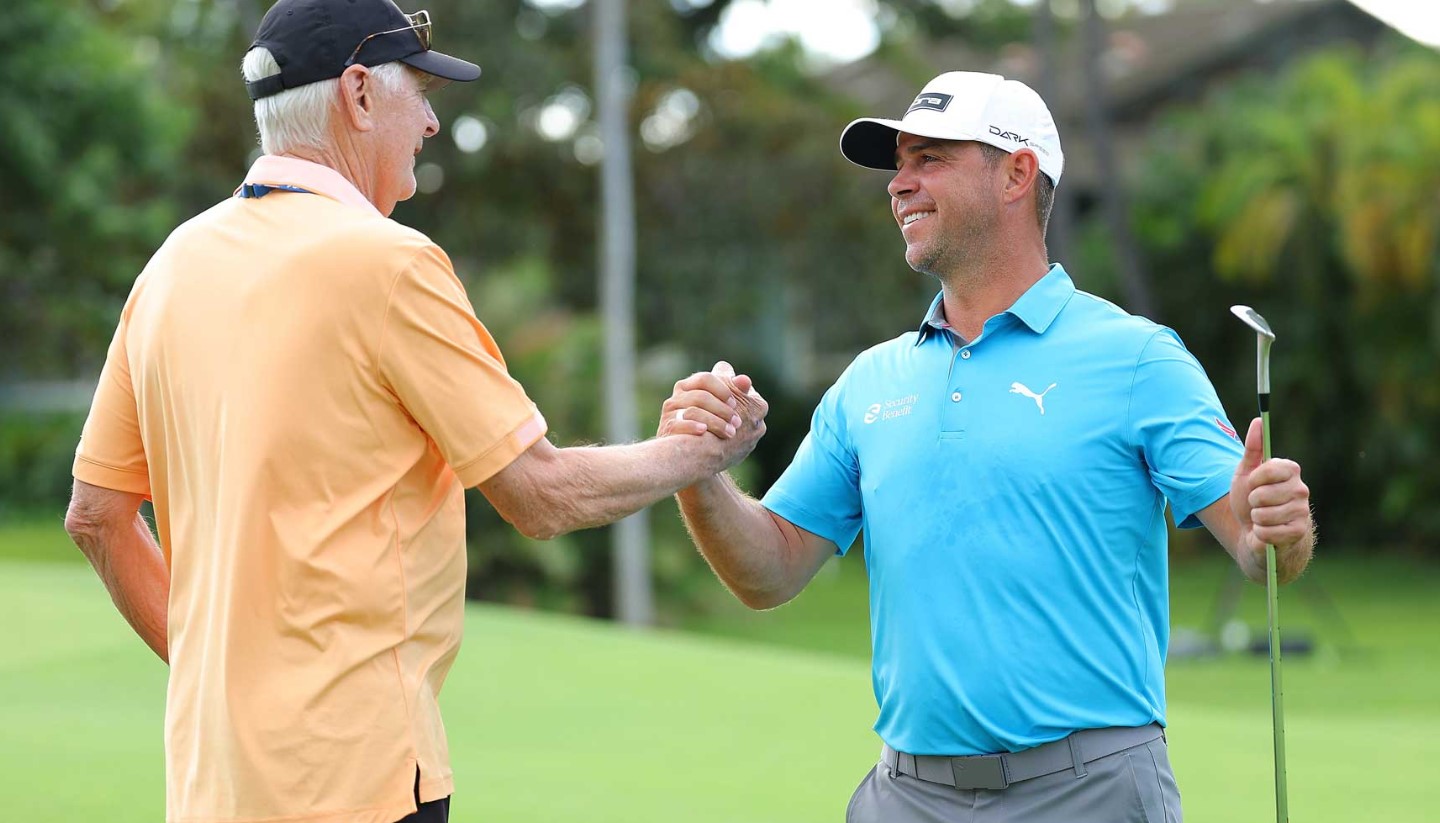
While many may perceive golf as a mere game, PGA Tour veteran Gary Woodland knows the true meaning of a struggle. Woodland, the 2019 U.S. Open champion, recently shared his harrowing battle with a brain lesion that ultimately led to his courageous return to the sport, as he prepares to compete at the Sony Open in Hawaii this week.
A Terrifying Journey
Woodland made the shocking announcement last August that he would undergo surgery for a brain lesion that had been diagnosed earlier in the year. At the time, he expressed gratitude for the support he had received, but now he reveals that the reality of his experience was far more terrifying than he let on.
Following a successful surgery in September and months of recovery, Woodland is making his triumphant return to the PGA Tour at the Sony Open. During a recent press conference, he candidly discussed the intense battle he faced over the past year, describing “four and a half months of every day really thinking I was going to die.”
Fighting Fear and Anxiety
In April, Woodland began experiencing a range of unsettling symptoms that filled him with fear. He recalls feeling unlike himself and experiencing severe jolting sensations, especially at night. These symptoms gave rise to overwhelming anxiety and an ever-present fear of death. Concerned by the worsening situation, he sought medical advice from a trusted doctor.
Rather than simply treating the symptoms, Woodland’s doctor decided to conduct an MRI, which revealed a lesion in his brain. It became clear that the jolting sensations and other symptoms were actually partial seizures. The lesion was located in a region of the brain responsible for fear and anxiety, and Woodland’s doctor reassured him that his experiences were entirely normal given the lesion’s location.
While medication initially helped to control the seizures, it also came with severe side effects such as memory loss and a loss of identity. Woodland faced numerous challenges during this period, with one particularly frightening incident occurring during the Memorial tournament in Ohio. He vividly recalls grappling with fear and anxiety in the middle of the night, despite being completely asleep. The only respite he found was when he could focus on playing golf, providing him with temporary relief.
A Life-Changing Decision
Eventually, the symptoms became too overwhelming for Woodland to continue playing golf. After careful consideration and consultation with his medical team, he made the difficult choice to undergo surgery. Prior to the procedure, his energy levels were so depleted that he could only manage one hour of activity per day. Reflecting on the previous 10 weeks of play, he recognized the sheer determination and strength that kept him going throughout that period.
The surgery carried significant risks, including the possibility of losing eyesight and experiencing paralysis on his left side. However, the operation proved successful, despite the lesion not being entirely removed. Following the surgery, Woodland showed incredible resilience by refusing a wheelchair and instead walking out of the hospital only two days later.
Woodland vividly describes the aftermath of the surgery, with 30 staples in his head and a large bandage covering the wound for weeks. This caused concern for his young children, who feared for his life as they witnessed his recovery from the safety of their home.
A New Perspective and an Optimistic Outlook
Despite his low energy levels immediately after the surgery, Woodland was determined to find a way to continue his golfing journey. With his wife’s support, he had a Full Swing putting simulator installed in their living room, allowing him to practice during periods of rest. Just five weeks after the surgery, he cautiously started swinging a club again. Subsequently, he returned to playing on the course and even traveled to Las Vegas for a meeting with renowned instructor Butch Harmon. Fortunately, Harmon quickly reassured Woodland that his game had not suffered amidst his health struggles.
Reflecting on his experience, Woodland acknowledges that it has profoundly changed him. He has witnessed the incredible goodness in the world, with an outpouring of love and support from those around him. Reuniting with his fellow players at the Sony Open has been overwhelming in the best possible way.
While Woodland acknowledges the need for ongoing monitoring of his brain, he remains grateful to have overcome this terrifying ordeal. He expresses a deep appreciation for his normal life and his return to golf, which he views as his true calling. Determined to show that one can triumph over adversity, he aims to inspire his children and demonstrate that no challenge is insurmountable.
“I don’t want this to be a bump in the road for me. I want it to be a jump start in my career…I’m here because I believe this is what I’ve been born to do, play great golf. I want to do that again,” Woodland declares with unwavering optimism and defiance. He firmly believes that nothing can stand in his way, and the future holds countless great achievements.
Frequently Asked Questions
What was the reason for Gary Woodland’s surgery?
Gary Woodland underwent surgery to address a brain lesion that was causing a range of concerning symptoms, such as tremors and anxiety.
How did the surgery affect Gary Woodland’s golfing career?
Although the surgery was successful, Gary Woodland faced numerous challenges while recovering. However, his determination and resilience allowed him to return to the PGA Tour and continue pursuing his passion for golf.
What risks did Gary Woodland face during his surgery?
The surgery carried the risk of potential eyesight loss and partial paralysis on Woodland’s left side. Fortunately, both risks were successfully avoided during the operation.
How did Gary Woodland maintain his golf practice during his recovery?
With his spouse’s permission, Gary Woodland had a Full Swing putting simulator installed in his living room, allowing him to practice his putting technique. As he regained strength, he gradually transitioned back to swinging a club and playing on the golf course.
What perspective did Gary Woodland gain from his experience?
Through his challenging journey, Gary Woodland discovered the immense goodness in the world and the unwavering support of those around him. He has gained a renewed appreciation for life and a resolute belief in the power of determination and resilience.
Leave a Reply