

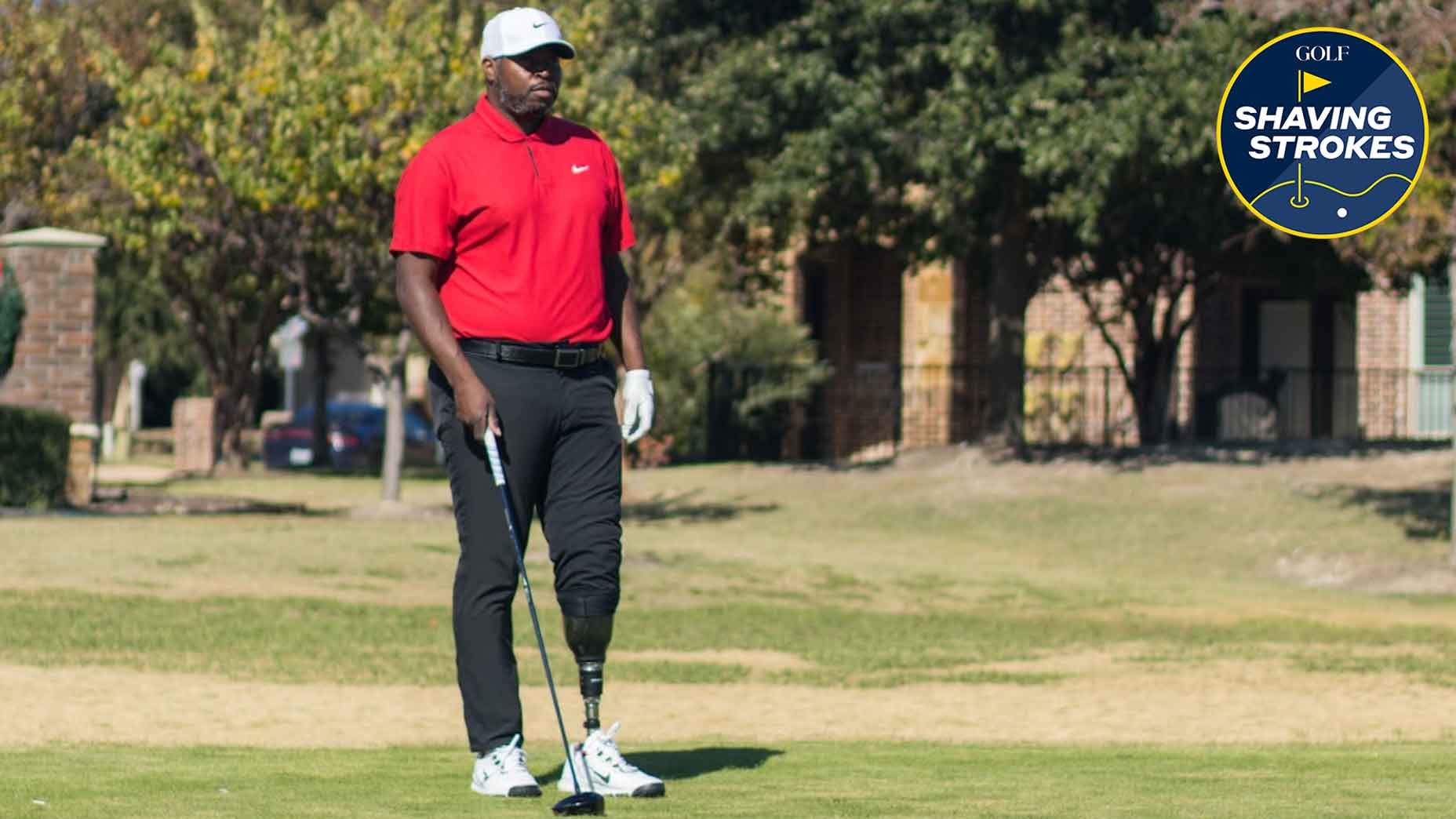
Welcome to Shaving Strokes, a new GOLF.com series in which we’re sharing improvements, learnings, and takeaways from amateur golfers just like you – including some of the speed bumps and challenges they faced along the way.
Not to get all deep here, but golf is sort of the perfect metaphor for life. Think about it: Even if you go out and shoot your best-ever round today, that doesn’t guarantee you’ll do the same thing tomorrow. It doesn’t mean you’ve figured out the game, or that you don’t need to continue to work to see consistent success. I dropped 4 strokes simply by better understanding my ability.
Sure, some people refuse to push themselves in life to “get comfortable in the uncomfortable,” but to truly reach your full potential, it takes motivation, a plan, honesty with yourself, and adapting! Golf is similar in this respect, because it requires strong mental focus, fundamentals, skill, and, maybe most importantly, patience to trust the process. It can be frustrating at times (but hopefully not too much!), but with the right practice and effort, you’ll reach the potential you’ve always dreamt of.
So what does it mean to unlock your golf potential? According to GOLF Teacher to Watch Carlos Brown, it’s simply about having the ability to discover you’re capable of becoming the player you want to be – then working toward that vision. “Unlocking your golf potential is the gateway to achieving your goals,” Brown says. “It’s about surpassing your own expectations and pushing the boundaries of what you thought was possible. By unlocking your golf potential, you’ll see improvements in your swing and feel more confident on the course, which will have a positive impact on your scores.”
Preparation: The Key to Success
Alexander Graham Bell once said that, “before anything else, preparation is the key to success.” He surely wasn’t referring to golf, but the same mindset applies to the sport, as it requires the same discipline toward preparing to reach your goals. Preparation allows you to relax, thrive, and be confident, so if you’ve properly prepared, you’ll know that you’re going to succeed.
So, what does this look like when it comes to golf? Here are some things we recommend:
Golf Journaling
Most successful tournament players use golf journals to gather knowledge for both present and future use. Writing down key notes from lessons, shot tendencies, quick tips to improve performance, or recaps from previous rounds allows players to be more intentional when practicing.
Time Management
Scheduling time to practice reps at home in a controlled environment (either off the course or on the driving range) will help uncomfortable movements feel more comfortable. By managing your time on a given day, you can become more intentional and efficient with your reps.
Personality and Preferred Learning Test
Take a personality or preferred learning test to gain greater knowledge of who you currently are, and discover how you respond to pressure and where you need the most work for improvement. This will also help you understand how you handle adversity or pressure and how to control any emotions on the golf course.
Practice: Training Your Way to Success
To improve, you must practice. This helps the brain better understand scenarios and movements, so as not to provide alternatives in the moment or when you encounter a situation that you’ve never been in before. The goal is to train the implicit memory section within our brain. Once this area understands how a process works, performance takes over and allows you to execute the skill without consciously thinking about it.
Here are some ways to practice to reach your golf potential:
Track and Measure Performance
Learn to be consistent with the little things like posture, grip, and setup. Next, dive into your tendencies to reveal things leading to bad shots or habits. Then determine what technical drills you’re planning to repeat to accomplish your goals.
Practice Playing
Develop a pre-shot routine and stick with it. Simply having a go-to routine can help get you through tough days when your swing may not totally be there.
Learn Your Shot Patterns
Understand your shot dispersion, and how it applies to picking the right targets, to play better golf. Our shot patterns are a combination of good, decent, and mistimed shots. Knowing your tendencies and shot dispersion will help you make better decisions on the course.
Mindset: The Key to Confidence
As our skills change and positively develop, so, too, does our mindset. The mind allows us to execute the skills that we’ve developed, so always make sure you approach a round (and each shot, really) with a positive mindset. This is why confidence is such a key attribute for playing well.
Here are some suggestions to help you perform your best:
Control Your Breathing
When golfers incorporate breath-work into their routines, they’re able to better control their heart rate and body tension. If you’re the type of golfer who gets anxious or nervous before a round, it could be helpful to try and incorporate a breathing exercise into your training routine. Breathing can help reset your mind and get you focused, while helping manage elevated emotions.
Perfect Your Pattern
By better understanding your tendencies, you’re able to develop a plan that gets you back to playing your best. Golf is full of uncontrollables like fear, bad bounces, poor weather, etc. But by knowing who you are and having a plan to “reset” when things go badly, you can regain your confidence and avoid one mistake turning into multiple mistakes, which can ruin an entire round.
Stay in the Present
Our biggest golf goals are achieved by thinking small. Take it one shot at a time, one hole at a time, and one round at a time. Remember, golf is a game of patience and perseverance. It rewards those who are willing to put in the time and effort to improve their skills. By following these three “P’s,” you now have a guide to steer you on your journey toward unleashing your true golf potential.

Keywords:
1.
22. Breathing exercises
23. Present moment
24. Patience
25. Perseverance.
Leave a Reply