
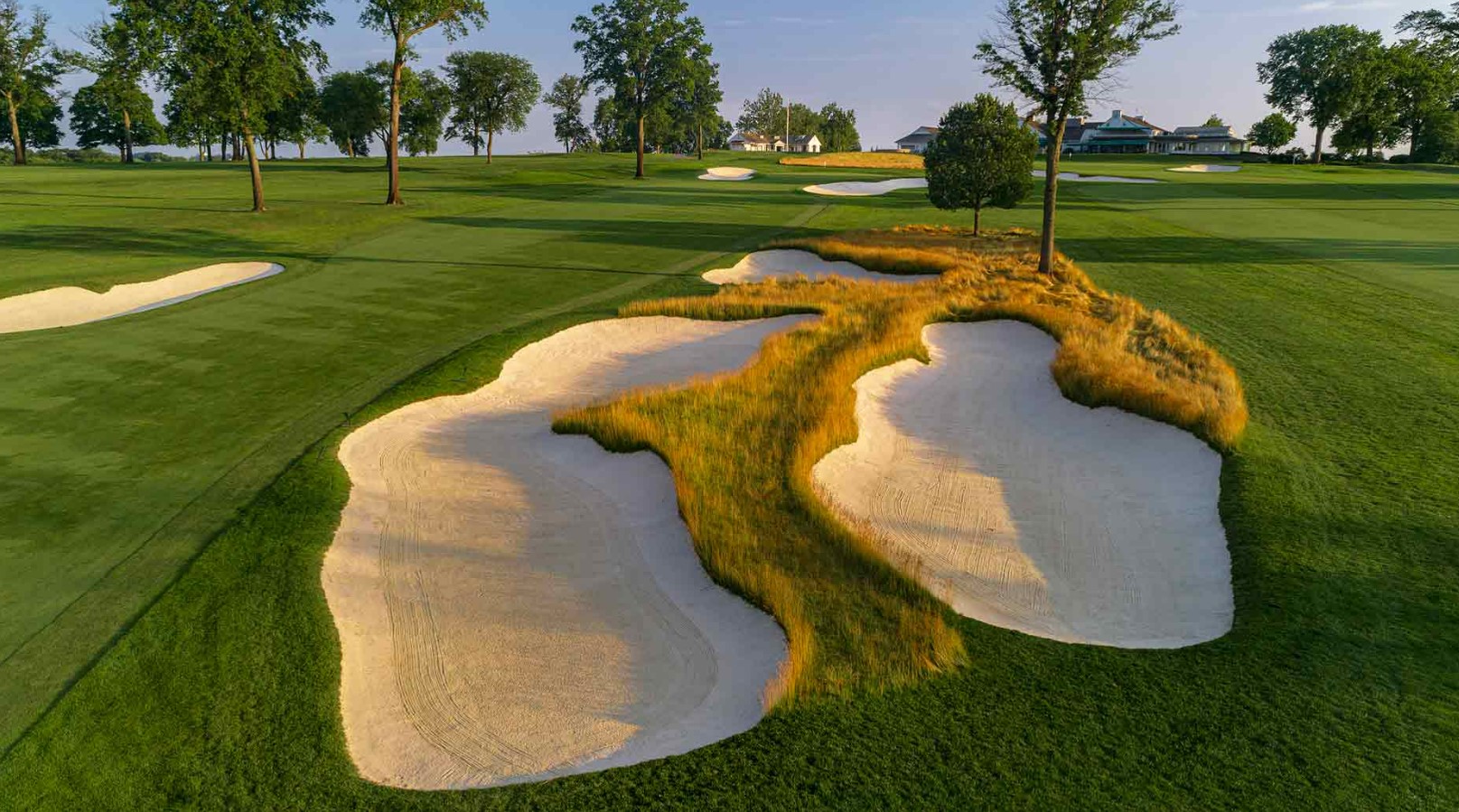
The upcoming U.S. Women’s Open will be held at the timeless Lancaster Country Club, a design crafted by the relatively uncelebrated Golden Age architect, William Flynn. Despite his lack of recognition, Flynn was an influential figure in his time, with a keen understanding of the game’s strategy and an emphasis on playing from the proper tees. His work has stood the test of time and continues to shape the golf landscape today.
The Legacy of William Flynn
Flynn, hailing from Boston, was a member of the esteemed Philadelphia School of Design, alongside renowned architects such as Donald Ross, Charles Blair Macdonald, A.W. Tillinghast, and Alister MacKenzie. While these names often come to mind when considering classic golf designs of the 1920s and 1930s, Flynn’s courses rival, if not surpass, their USGA championship pedigrees.
Some of Flynn’s notable designs include Merion, Pine Valley, Shinnecock Hills, The Country Club, and Cherry Hills. These courses have become iconic cathedrals of the game, revered for their challenging layouts and timeless beauty. Moreover, the USGA frequently returns to Flynn-designed courses, such as The Cascades Course at The Homestead in Hot Springs, VA, showcasing their enduring qualities and shot-making demands.
Lancaster Country Club: A Flynn Masterpiece
Lancaster Country Club, which will host the U.S. Women’s Open for the second time in nine years, exemplifies Flynn’s architectural prowess. The course features strategic design elements, with fewer trees but an additional dozen bunkers being added since the last championship. Ron Forse and Jim Nagle, the architects overseeing the club’s restoration efforts, have contributed to preserving Flynn’s original vision.
Renowned for its magnificent putting green complexes, Lancaster Country Club presents a shotmaker’s course, where selecting the right strategy is crucial. It’s worth noting that the club’s close relationship with In Gee Chun, the 2015 U.S. Women’s Open champion, has further strengthened its reputation. The Chun Foundation, established in her name, offers college scholarships to caddies and club staff members’ families, fostering a lasting bond between the champion and the club.
The Design Philosophy: Strategy and Versatility
Flynn’s approach to golf course design prioritized strategy and versatility. He aimed to create layouts that offered choices to players and rewarded skillful shot execution. His use of short grass around the greens and strategic placement of greens on the land stands as a testament to his brilliance.
Take, for example, the par-4 8th hole at Shinnecock Hills, one of Flynn’s notable designs. With a wide fairway, hitting the tee shot on the right side and attacking the hole on the right side of the green can leave golfers with an unfavorable approach. Flynn’s designs challenge players to consider angles, shot shapes, and trajectories, ensuring that precision and thoughtful decision-making are rewarded.
Flynn’s Agronomic Expertise and Continued Evolution
Flynn’s expertise extended beyond design, encompassing agronomy and course maintenance. His involvement in turfgrass research and course construction, particularly at Merion Golf Club, showcased his commitment to developing optimal playing conditions. Flynn’s knowledge and attention to detail contributed to the success of the East Course at Merion, a venue renowned for hosting a record 19 USGA events.
Lancaster Country Club, founded in 1900, witnessed Flynn’s transformative touch. With Flynn’s modifications, the club expanded from a nine-hole course to an 18-hole gem. His involvement in the project spanned over a decade, illustrating his dedication to continually improving the course. Flynn’s ongoing relationship with the club and his regular visits ensured that Lancaster Country Club evolved to suit the changing demands of the game.
Flynn’s Architectural Legacy
Although Flynn’s portfolio consists of fewer designs compared to figures like Ross or Tillinghast, his courses have left an indelible mark on American golf. Approximately 50 Flynn-designed courses remain in existence today, with each one offering a unique playing experience. Flynn’s extensive on-site involvement, attention to detail, and ability to adapt to evolving golfer preferences resulted in enduring and remarkable designs.
The Magnificence of Lancaster Country Club
Lancaster Country Club showcases the essence of Flynn’s design philosophy. The strategic routing of the course, including its iconic holes like the challenging par-4 4th hole and the demanding uphill finishing par 4s, ensures a complete test of golf. The surrounding landscape, including the Conestoga River that comes into play on several holes, adds to the course’s natural beauty and challenges players to make precise shots.
The course’s reputation received a significant boost after hosting the U.S. Women’s Open in 2015. The event witnessed a memorable back-nine charge by In Gee Chun and shattered attendance records. The community’s overwhelming support during the championship showcased the true spirit of the U.S. Women’s Open and left an indelible impression on players and fans alike.
The Future of Flynn’s Courses
As the golfing world eagerly awaits the U.S. Women’s Open at Lancaster Country Club, Flynn’s architectural brilliance will be on full display. The rich history, strategic design elements, and captivating beauty of Flynn’s courses endure, ensuring their continued relevance in the golfing landscape.
Flynn’s contributions to the game extend beyond his individual designs. His emphasis on strategy, versatility, and maintaining a strong connection between architect, course, and community remain fundamental tenets of golf course architecture. Flynn’s legacy lives on, inspiring future generations of golf architects.
_______________________________________________________________________________________
Frequently Asked Questions (FAQs):
How many Flynn-designed courses are still in existence?
Approximately 50 Flynn-designed courses continue to provide golfers with exceptional playing experiences.
What are some noteworthy holes at Lancaster Country Club?
The 4th hole, a par-4 with a creek running alongside the fairway and an uphill approach over water to a shallow, raised green, is considered one of the iconic holes in American golf. The challenging uphill finishing par-4 holes, 9 and 18, also stand out.
What makes Lancaster Country Club a shotmaker’s course?
The course’s strategic design, emphasis on shot selection, and placement of greens and bunkers demand skillful shot execution and reward intelligent decision-making.
What role did William Flynn play in the development of the East Course at Merion Golf Club?
Flynn worked alongside architect Hugh Wilson to build both courses at Merion Golf Club. He subsequently became the lead architect for the East Course and influenced its design for multiple USGA events.
What distinguishes Flynn’s designs from other architects of his time?
Flynn’s courses often feature par 70 layouts, a deliberate choice that ensures a balance of scoring opportunities while challenging players to execute a variety of shots. His emphasis on strategy, versatility, and the integration of short grass and green placement set his designs apart.
Leave a Reply