
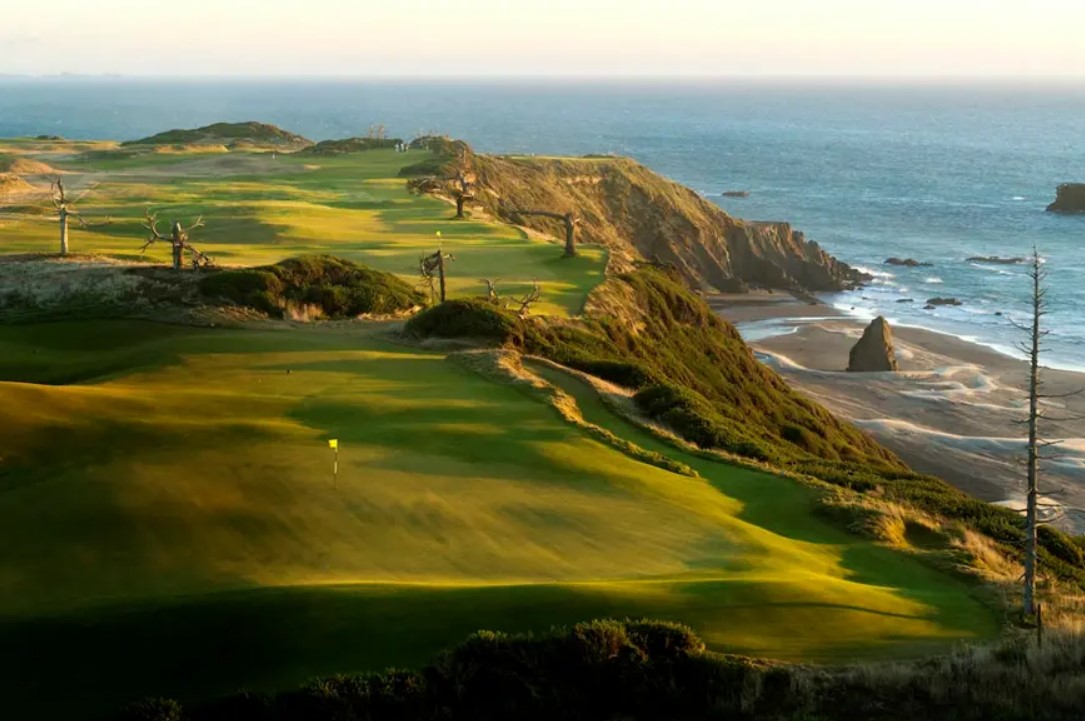
If you’ve had the pleasure of playing the acclaimed Sheep Ranch course at Bandon Dunes Golf Resort in Oregon, you understand the impact of the wind. This coastal course, nestled among the stunning landscapes of Bandon, showcases the true power and beauty of nature. But did you know that before it became a world-class golf course, the land was home to an experimental wind farm?
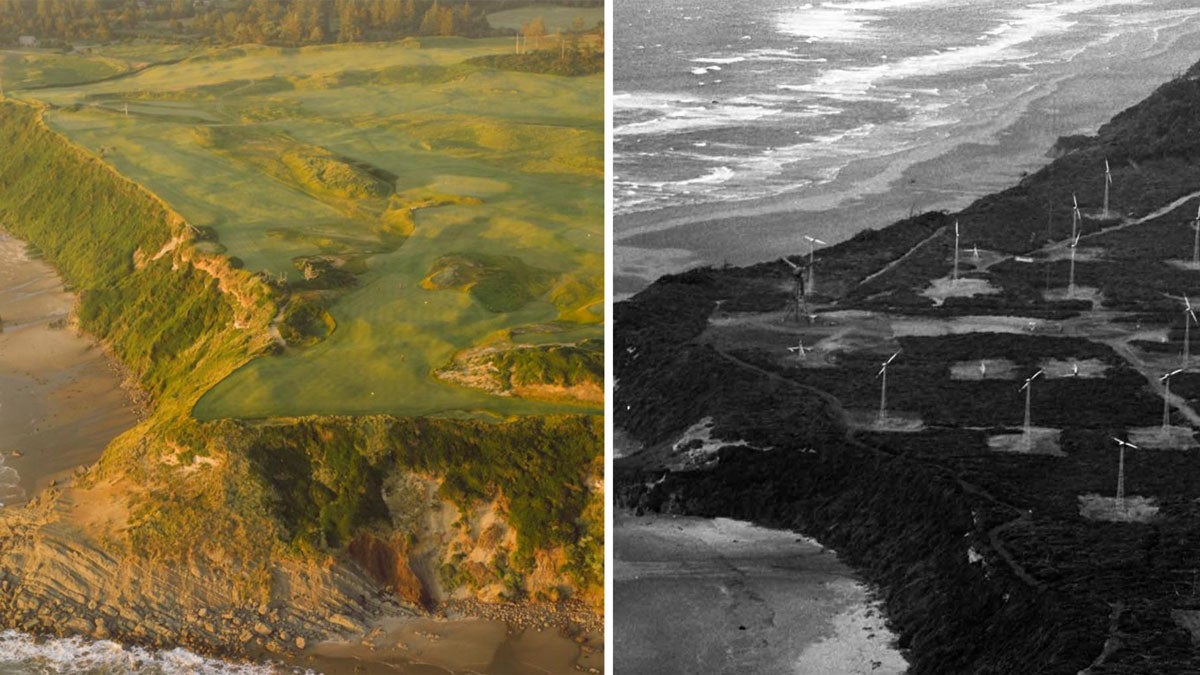
Back in the early 1980s, when the Sheep Ranch was just a dream, the coastal area was chosen as the location for the Whisky Run Wind Farm, an ambitious project by the Pacific Power & Light Company. This wind farm was established to assess the potential of harnessing wind energy along the Oregon coast.
Extensive research had shown that this particular stretch of the coast possessed the ideal conditions for generating wind power in the Pacific Northwest. However, not everyone welcomed the wind farm with open arms. Some locals expressed concerns about its proximity to the water and the potential impact on the environment.
Over a dozen windmills were erected, standing tall against the coastal winds. Researchers monitored their performance, fascinated by the possibilities of capturing renewable energy from the relentless breeze. However, as time went on, it became evident that the wet and salty seaside air posed challenges for the sustainability of the wind farm.
While the winds in this coastal region were strong, they proved to lack the consistency required for efficient wind farming. As in golf, where consistency outweighs brute power, the future of wind energy generation lay farther inland, where the winds were steadier.
Fast forward to the present day, and the Sheep Ranch is a masterpiece designed by the renowned duo of Bill Coore and Ben Crenshaw. The windmills have vanished from the landscape, but traces of their existence can still be found beneath the sand.
During the construction of the course, Coore and Crenshaw’s team removed most of the remaining wiring and cables that once connected the windmills to the power grid. However, the concrete foundations were left untouched, buried beneath layers of sand. These remnants tell a story of the area’s pioneering exploration into wind power and serve as a testament to the region’s commitment to renewable energy.
Integrating Wind-Farm Elements into the Golf Course Design
Sheep Ranch incorporates subtle nods to its wind-farm history. One such feature is the angular 15th green, which was inspired by an old service road that once provided access to the wind turbines. Coore’s artistic vision seamlessly blends the essence of the wind farm with the natural contours of the land, maintaining the awe-inspiring atmosphere of this coastal gem.
There’s also a charming wooden structure located beside the 11th green. Looking back through time, you’ll find photographs featuring a sign that provided insightful texts about the wind farm. Although the sign is no longer there, the structure now houses a bench where golfers can unwind and marvel at the picturesque sunset that graces the course.
Experience the Windy Legacy at Sheep Ranch
Today, as you tackle the challenges of the wind-swept Sheep Ranch course, you’re reminded of its vibrant history. The gusts that shape your shots and test your skills speak to the untamed beauty of the Oregon coast. From the remnants of the wind farm to the breathtaking sunset views, every corner of the course echoes with the spirit of resilience and innovation.
Frequently Asked Questions (FAQs):
What was the Whisky Run Wind Farm?
The Whisky Run Wind Farm was a wind-energy project established by the Pacific Power & Light Company in the 1980s to explore the potential of wind-generated electricity along the Oregon coast.
Were the windmills a permanent fixture at Sheep Ranch?
No, the windmills were eventually removed due to the challenges posed by the wet and salty seaside air. The lack of consistency in the coastal winds led to the realization that wind farming would be more viable farther inland.
How did the wind farm influence the design of the Sheep Ranch course?
The remnants of the wind farm, such as the concrete foundations and the old service road, inspired the natural contouring of the course. These elements pay homage to the area’s wind energy heritage while seamlessly integrating into the overall design.
Leave a Reply