
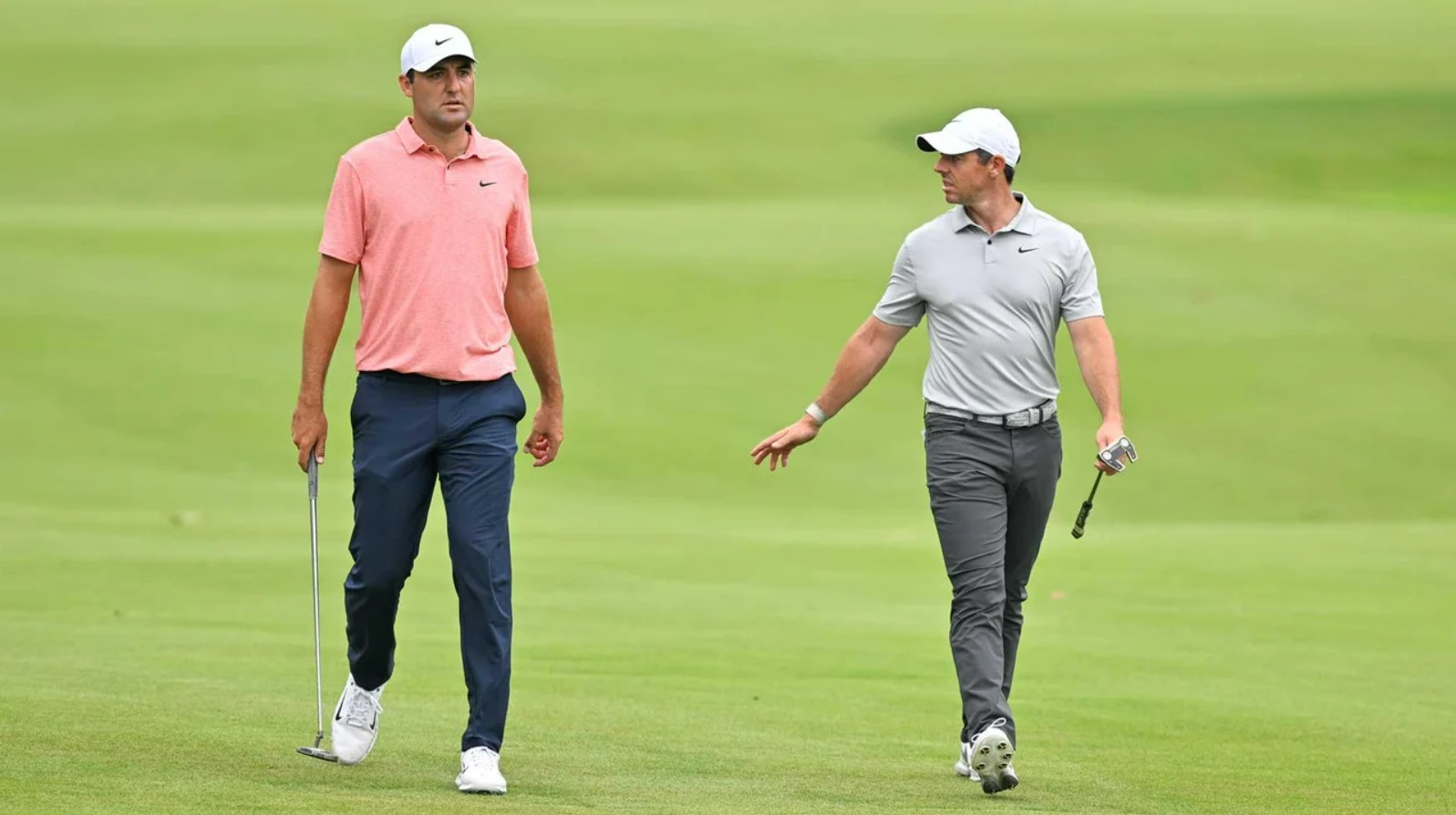
Scottie Scheffler and Rory McIlroy, two of the best golfers in the world, have recently opened up and shared their experiences with putting difficulties. In this article, we delve into their interviews and explore the valuable lessons they have learned. Let’s take a closer look at their journeys and what they’ve had to say.
Rory McIlroy’s Putting Woes
Rory McIlroy, known for his exceptional driving skills, has been facing some challenges on the green. During the Cognizant Classic, McIlroy dominated in strokes gained off the tee but struggled, finishing 64th in strokes gained putting. This resulted in a 21st-place finish. McIlroy expressed his disappointment, stating that it could have been a much better week.
The first round of the Arnold Palmer Invitational didn’t bring better putting results for McIlroy either. Although he ranked third in strokes gained off the tee, he fell to 66th in putting. However, things took a turn for the better in the subsequent round.
After the first round, Golf Channel’s cameras captured McIlroy on the putting green, working on his technique. Notably, NBC Sports analyst Brad Faxon, who doubles as McIlroy’s putting advisor, was there to lend his expertise. Their extensive session seemed to have had a positive impact.
On the following day, McIlroy not only led the field in strokes gained off the tee but also in strokes gained putting. Though his iron and wedge performance didn’t match his putting prowess, he managed a respectable round of two-under-par 70, placing him in a competitive position for the tournament.
When questioned about his secret to success, McIlroy shared his insights candidly. He revealed that he didn’t make major adjustments to his technique and focused on the speed and accuracy of his putts. McIlroy emphasized the importance of starting the ball on the intended line and achieving a solid strike. Moreover, he mentioned a tendency to let the putter rise too much during his stroke, resulting in inconsistent contact. To address this, he temporarily switched to a blade putter, or what he jokingly referred to as a “real putter.” By doing so, he aimed to improve his stroke and ensure a consistent contact point.
McIlroy also pointed out that most of his struggles stemmed from his right side. To combat this, he focused on his right arm’s position, ensuring that his right shoulder moved downward during the transition from backswing to through-swing. This motion helped him keep the putter low through impact.
Interestingly, McIlroy attributed his recent putting woes to playing on the bumpy poa greens of California’s West Coast. He acknowledged that losing confidence on such greens could negatively affect his putting performance. Nonetheless, he expressed his satisfaction with the improvement he felt after the adjustments he made.
Let’s summarize McIlroy’s valuable advice for anyone seeking improvement in their own putting game:
- 1. Keep changes minimal.
- 2. Emphasize starting the ball on line.
- 3. Focus on achieving proper contact.
- 4. Maintain a low putter position through impact.
Despite the simplicity of these principles, they can have a significant impact on your putting game.
Scottie Scheffler’s Mallet Putter Experiment
Scottie Scheffler, a talented golfer who excels in multiple aspects of the game, has experienced his fair share of struggles on the green. During the Genesis Invitational, McIlroy, who had already embraced a mallet putter himself, shared his thoughts on Scheffler’s game. He expressed his curiosity about seeing Scheffler try out a mallet putter, mentioning its potential benefits.
Surprisingly, Scheffler took the advice to heart, and at Bay Hill, he made a change. He arrived with a mallet putter in hand, creating an interesting connection between the two golfers.
On the first day at Bay Hill, Scheffler faced some challenges, ranking 55th in putts made and losing around one and a half strokes on the greens. However, his second round showcased a different outcome.
During Friday’s round, Scheffler produced impressive results with the putter. He sank a remarkable 45-foot birdie putt on the 15th hole. Continuing his momentum, he two-putted for birdie on the par-5 16th and then drained a 17-footer for birdie on the 17th. These performances catapulted him into a tie for the lead, finishing the day with a score of 7-under par.
After his round, Scheffler addressed the mallet putter and McIlroy’s previous comments. He shared that his coach, Randy, had actually considered the possibility before the mention from McIlroy. Although Scheffler did not directly credit McIlroy for the change, he took no offense and found the timing quite amusing.
Scheffler emphasized his commitment to his process and staying unfazed by any disruptions. He revealed that his main goal was to hit solid putts and not strive for perfection. Despite early struggles with short putts in the first two rounds, he managed to regroup and trust his fundamentals.
When asked what made the significant difference between Thursday and Friday, Scheffler simply responded, “I think they just went in today.” This sentiment serves as a valuable reminder that sometimes, success on the green can be as unpredictable as it is rewarding.
As the tournament progresses, we eagerly await McIlroy and Scheffler’s performances and hope to witness them build upon and apply the lessons they’ve recently learned. Putting struggles are not uncommon in the world of golf, but their determination and willingness to adapt provide valuable insights for golfers of all levels.
Frequently Asked Questions (FAQs):
How did Rory McIlroy improve his putting?
McIlroy focused on maintaining consistent speed, starting the ball on the intended line, achieving a solid strike, and keeping the putter low through impact. He also made slight adjustments to address issues stemming from his right side.
Did Rory McIlroy switch putters?
While McIlroy had previously spoken favorably about mallet putters, he temporarily switched to a blade putter to refine his stroke and improve contact.
What advice did McIlroy give for improving putting?
McIlroy highlighted the importance of simplicity and emphasized minimal changes, starting the ball on line, achieving proper contact, and maintaining a low putter position through impact.
How did Scottie Scheffler respond to McIlroy’s suggestion of using a mallet putter?
Scheffler took McIlroy’s suggestion to heart and decided to experiment with a mallet putter at the Bay Hill tournament, though he didn’t directly credit McIlroy for the change.
What approach did Scheffler adopt to deal with his putting struggles?
Scheffler focused on sticking to his process, not being bothered by imperfections, and hitting solid putts. He aimed to remain resilient and avoid striving for perfection.
Leave a Reply