
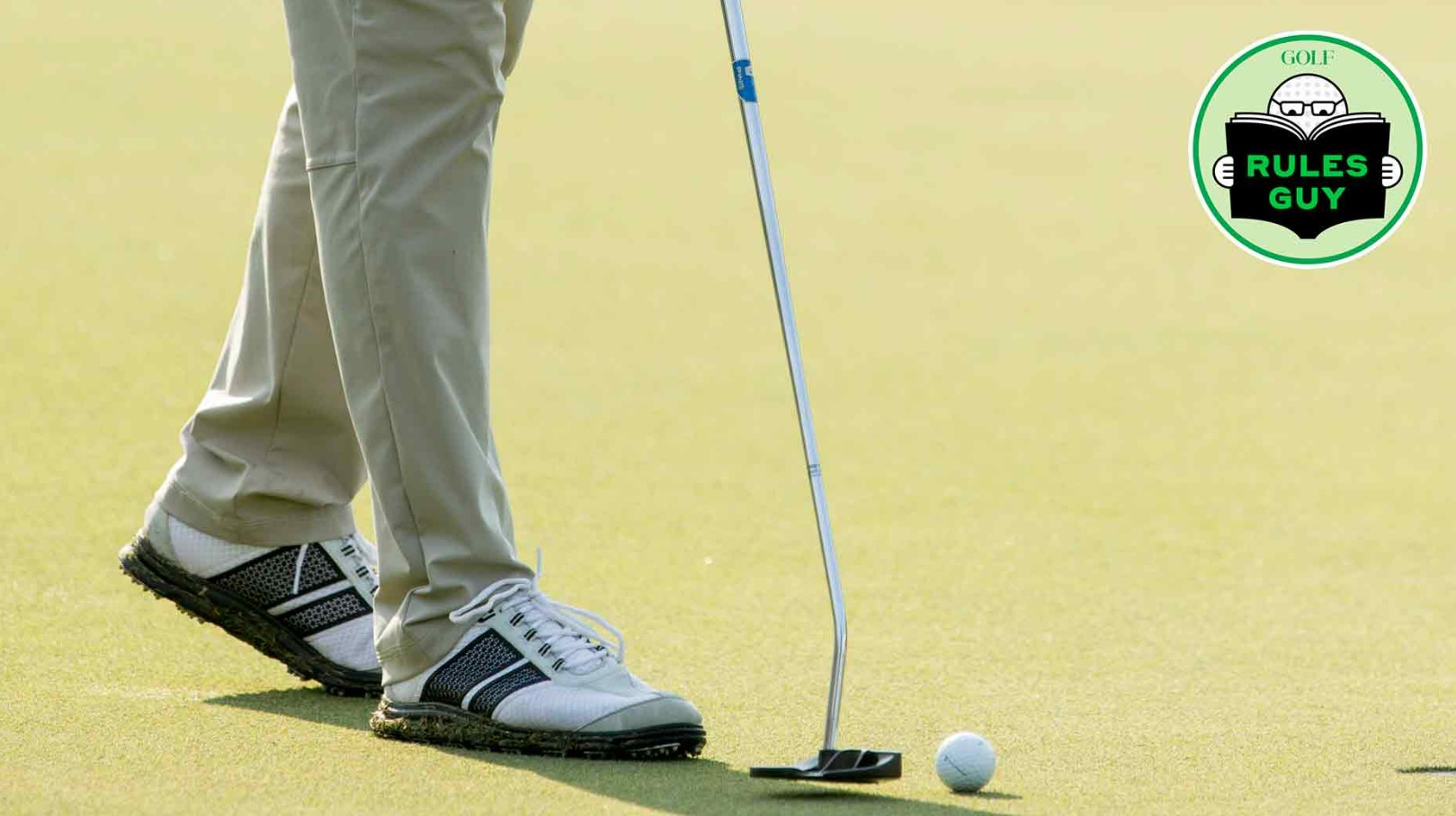
What do the Rules say about how many times you can tamp down the grass before making a stroke?
The Rules of Golf can be tricky! Thankfully, we’ve got the guru. Our Rules Guy knows the book front to back. Got a question? He’s got all the answers.
Today, we address a concern raised by Stephen Sipe from Yorktown, Va., regarding his son’s experience in a junior tournament. Stephen’s son noticed that his playing partner was consistently tamping down the grass on every green, multiple times before and after the stroke. Concerned about the fairness of this behavior, Stephen’s son complained to a Rules official, and interestingly enough, the playing partner stopped doing it when others were watching. If this tamping is not okay, what’s the Rules reference?
Tamping Down the Grass – Rules and Guidelines
Repairing damage to the putting green, such as spike and scuff marks or old ball marks, is allowed under the Rules of Golf. This repair process can often resemble tamping down the grass. However, there is a distinction to be made – players are not allowed to improve their line of play by pressing down the turf without any intent of repairing damage. Doing so would result in a penalty for improving the conditions affecting the stroke. It is important to note that the act of tamping itself does not result in a penalty, unless the player actually alters the condition of the putting green and gains a potential advantage by doing so.
Rule 13.1c(2) clarifies this point further. The middle paragraph of the rule states, “But if the player improves the putting green by taking actions that exceed what is reasonable to restore the putting green to its original condition (such as by creating a path-way to the hole or by using an object that is not allowed), the player gets the general penalty for a breach of Rule 8.1a.” In case of any dispute, the Committee will evaluate the evidence and make a determination accordingly.
A Friend’s Ball Resting atop Dumped Greens Plugs
John Harkins from Raleigh, NC, has an interesting situation involving a friend’s ball. The ball came to rest above an area where the maintenance staff had dumped greens plugs following a recent course aeration. The region beneath the plugs, normally considered rough, had washed-out hardpan. Initially, the friend considered taking relief for ground under repair, but since it wasn’t marked as such, John suggested that the existing lie was already good and unlikely to improve with a drop. However, his friend decided to remove some plugs from behind the ball, leaving the ball in its original spot but elevated. Can removing loose impediments be considered a rules violation for improving the lie? And could the friend have taken a drop for the supposed ground under repair despite the absence of signage?
It turns out that John’s friend was correct in his actions. The aeration plugs in this case qualified as loose impediments, and the player has the right to remove them in any way as long as the ball remains in its position. Rule 8.1 explicitly states that removing loose impediments is not governed by the rules of improving the lie. Even if the removal of the plugs makes the lie better, there is no penalty as long as the ball is not moved during the process.
Regarding the possibility of taking a drop for ground under repair, it depends on the scenario. If the aeration plugs were piled temporarily for later removal, then the pile itself constituted ground under repair, enabling free relief. However, if the plugs were already in their final home, free relief would not have been permitted.
Leave a Reply