
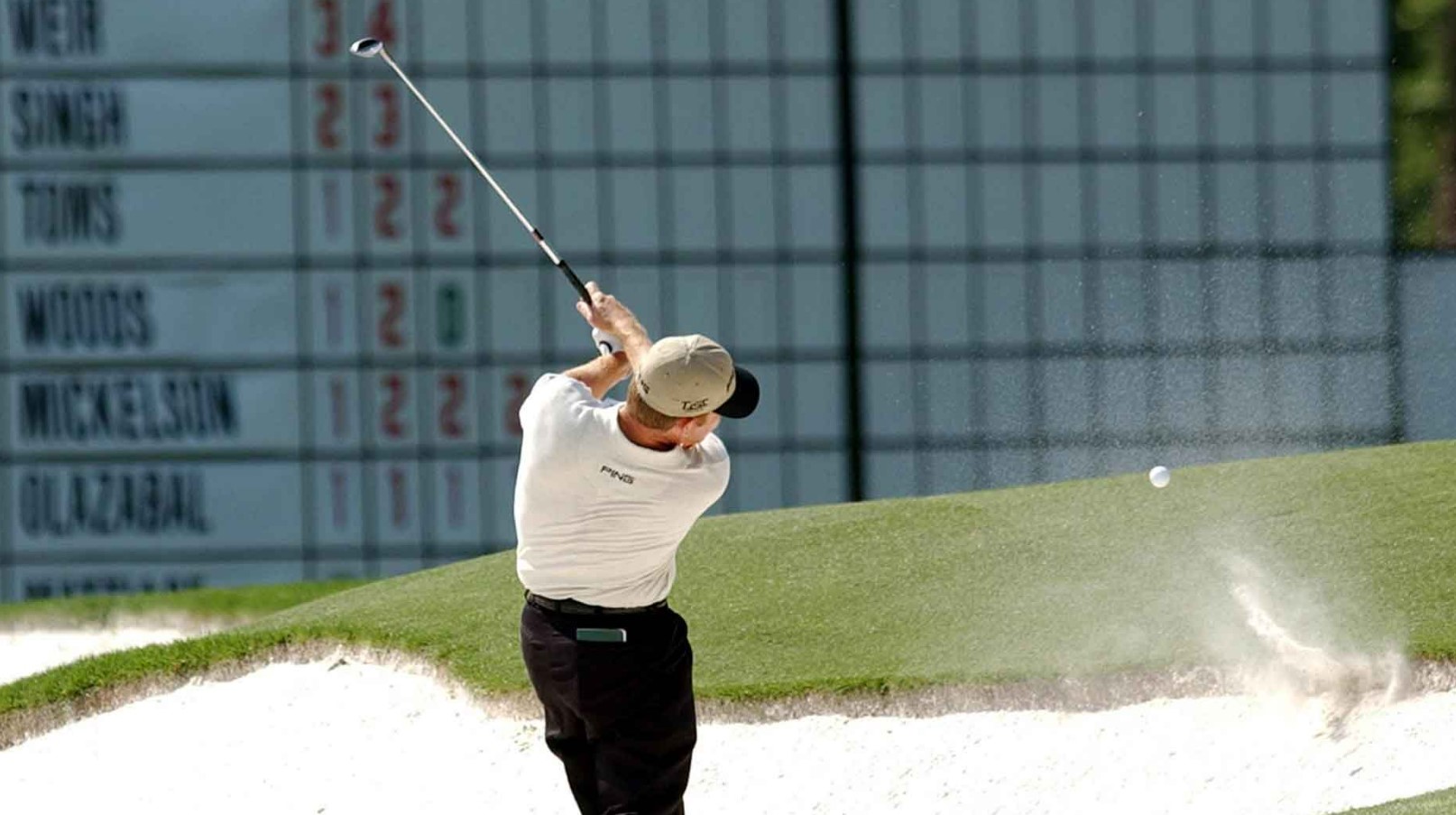
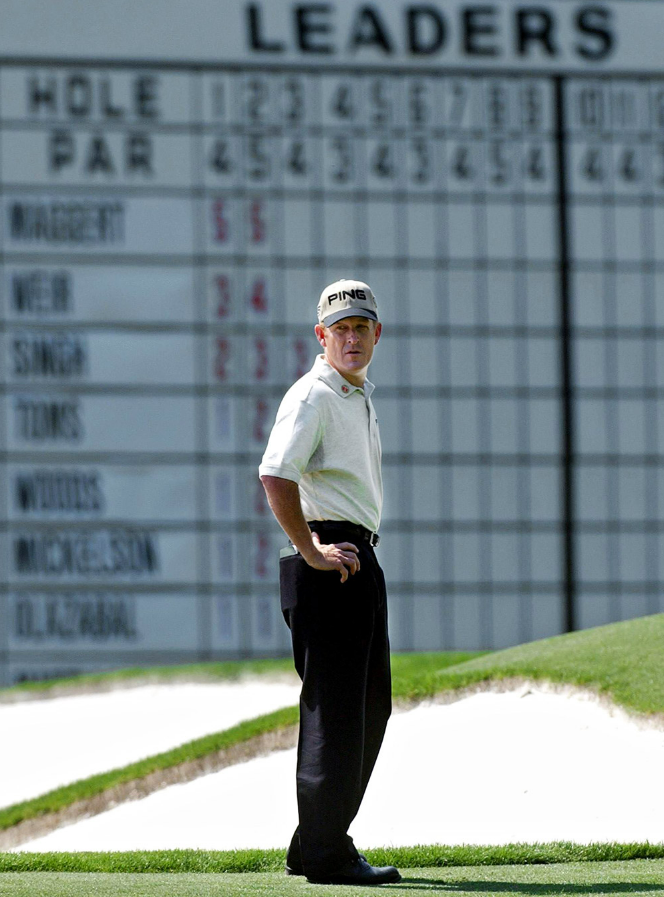
At 2024, we can’t help but reflect on the fascinating history of the Masters. One particular incident that stands out is Jeff Maggert’s unfortunate and costly rules mishap that took place in a bunker at the 2003 Masters. In this article, we’ll delve into the details of this incident, exploring the intricacies of the rules and the impact it had on Maggert’s performance.
The Unfortunate Shot
Under immense pressure on the final round, Jeff Maggert found himself leading by one stroke but facing a challenging situation on the 3rd hole, known as Flowering Peach. He ended up in a fairway bunker on the left side, which proved to be an obstacle in his path to victory.
With hopes of escaping the precarious situation, Maggert attempted a wedge shot out of the bunker. However, fortune did not favor him on this occasion. His shot hit the face of the bunker, causing the ball to bounce back and collide with his chest. According to the prevailing rules, this unfortunate incident resulted in a two-stroke penalty for Maggert.
The impact of this penalty was substantial, as it ultimately led to a triple-bogey 7 on the hole. Maggert’s final round score of 75 left him with a T5 finish in the tournament.
Changes in the Rules
Over time, the rules governing such incidents have evolved. In Maggert’s case, the penalty he incurred became a point of contention. Eventually, a one-stroke sanction was applied, followed by a revision in the rules in 2019 (see Rule 11.1).
This revision aimed to address the accidental self-deflection penalty that Maggert experienced during his time at the Masters. The new rule eliminated this penalty entirely, providing relief to players who encounter similar situations in the future.
Advice from the Rules Guru
If you find yourself facing a deflection scenario or have questions regarding similar incidents, it’s crucial to seek guidance from rule experts. They possess the knowledge and experience necessary to navigate through such circumstances with precision and accuracy.
For insights and deflection guidance from our esteemed guru, be sure to read our informative article on the topic titled “What do you do if your ball is deflected by a rogue pushcart?”.
Frequently Asked Questions (FAQs):
In a stroke-play outing, my playing partner’s pitch shot ricocheted off another player’s foot and landed in the hole. Does this count as a birdie?
In golf, unlike in basketball’s H-O-R-S-E game, bank shots do not need to be called in advance. As per Rule 11.1, if a ball played from off the putting green accidentally hits or is deflected by another object, it must be played as it lies, without incurring any penalties. Therefore, the offline shot that ricocheted off the foot and found its way into the hole counts as a legitimate birdie.
In a stroke-play outing, my playing partner’s pitch shot ricocheted off another player’s foot and landed in the hole. Does this count as a birdie?
Yes, according to Rule 11.1, if a ball played from off the putting green accidentally hits or is deflected by another object, it must be played as it lies, without incurring any penalties. Therefore, the shot that ricocheted off the foot and found its way into the hole counts as a legitimate birdie.
If my ball accidentally hits a spectator’s chair and rebounds onto the green, am I penalized?
No, according to Rule 11.1, if a ball accidentally hits an outside influence such as a spectator’s chair and ends up in a more favorable position (on the green, for instance), there is no penalty, and the ball must be played from its new position.
During a round, my ball is deflected by a tree branch and ends up out of bounds. How should I proceed according to the rules?
In this scenario, you would need to proceed under the applicable out-of-bounds rule. The deflection by a tree branch doesn’t change the out-of-bounds status of the ball. You would need to take a stroke-and-distance penalty, returning to the spot from which you last played and playing another ball under penalty of one stroke.
Leave a Reply