
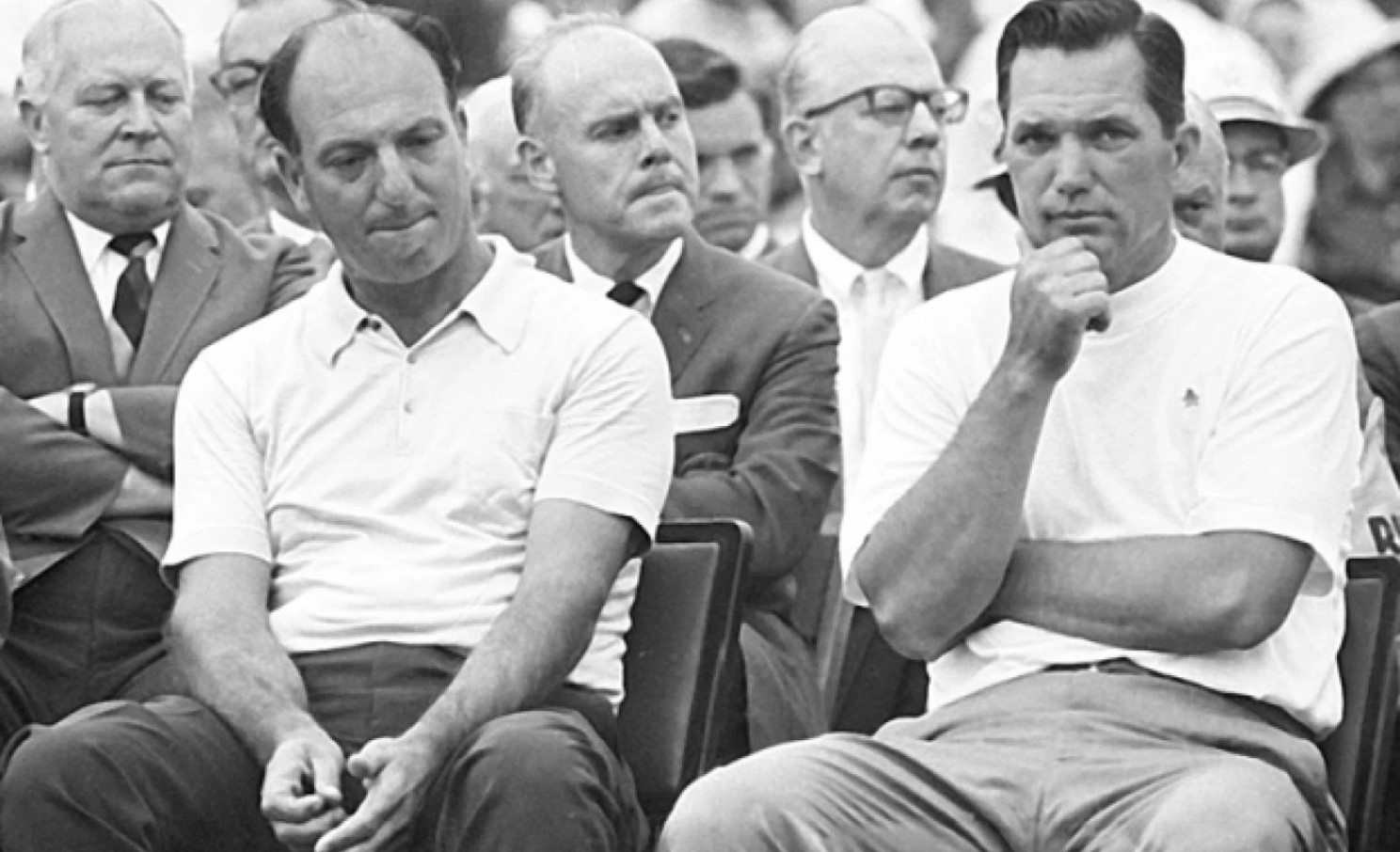
Competitors at Augusta National have witnessed both triumphs and heartbreaks that have left an indelible mark on the history of the sport. From Roberto DeVicenzo’s infamous incorrect scorecard in 1968 to Scott Hoch’s missed two-footer in 1989, Greg Norman’s final-round meltdown in 1996, Rory McIlroy’s back-nine implosion in 2011, and Jordan Spieth’s Amen Corner adventure in 2016, these hallowed grounds have a penchant for delivering heartbreak. The pristine beauty of Augusta National, with its towering pines and vibrant azaleas, juxtaposes the emotional rollercoaster endured by its competitors.
Bailey Shoemaker, an aspiring young golfer, seemed destined to join the ranks of ANWA winners but ultimately became another victim of Augusta National’s heartbreak. Her experience was not self-inflicted, but the pain was no less acute. After enduring a long wait, her heartbreak felt all the more devastating.
“I just had to putt well today and get it started early,” Bailey Shoemaker reflected on her remarkable final round. “I knew if I could keep the momentum going and give myself opportunities all day, I’d have a chance.”
In a turn of events that unfolded rapidly, Shoemaker found herself in excellent form. As she traversed the course, she tapped into her breakneck mentality, playing at a fast pace that seemed to align perfectly with Augusta National’s demands. When a rules official informed her that she and her playing partner were out of position and on the clock, Shoemaker embraced the challenge. The accelerated pace propelled her performance.
Shoemaker’s momentum carried her through the 5th hole, where she birdied, and continued to gain steam throughout the course. She triumphantly added more circles to her scorecard on the 7th, 11th, 13th, and 16th holes. As she approached the 18th green, she found herself alone at the top, with a treacherous two-putt from the back of the green separating her from victory. With nerves of steel, Shoemaker successfully completed the putt, concluding her historic final round with a bogey-free 66: the lowest final round in ANWA history.
After signing her scorecard, Shoemaker waited anxiously for Lottie Woad’s final score to be posted on the mechanical scoreboard located above the 18th green. With Woad dropping to five under par after a bogey on the 13th hole, Shoemaker’s seven-under score positioned her two strokes ahead as the clubhouse leader.
As she savored her achievements and relished the congratulations from admirers, Shoemaker interviewed with the Golf Channel beneath Augusta National’s iconic oak tree. Her every move was scrutinized by media members, who filled their notebooks with details of her presumed victory-to-be. Officials and fans eagerly engaged with Shoemaker, indicating her imminent victory.
Accompanied by her team, Shoemaker eventually made her way to the range, where she maintained her focus and practiced her shots. Golf Channel had their cameras trained on her, and a group of approximately forty fans observed her every swing. The range atmosphere shielded her from the unfolding events on the course.
Meanwhile, Lottie Woad embarked on a remarkable late charge, saving par and then birdieing holes 14 and 15 to narrow the gap to a single stroke. Though she missed a crucial birdie putt on the 16th hole, her resolve remained unscathed. At the 17th hole, Woad unleashed a precise tee shot, leaving her with a wedge in hand to conquer the treacherous green.
Unbeknownst to those on the range, Shoemaker decided to investigate the updates on the tournament’s progress. Curiosity led her to a small white building situated between the range and the putting green. There, she encountered USC head golf coach Justin Silverstein, who delivered the news:
“It’s tied,” he said. “Woad just birdied the 17th.”
With a par on the 18th hole, Woad would have forced a sudden-death playoff with Shoemaker. However, Woad ensured that the playoff would not materialize. Her drive on the finishing hole found the fairway, and her approach shot settled just 15 feet beyond the hole. Without flinching, she elegantly drained the birdie putt, securing the title outright. Woad’s dramatic come-from-behind victory, featuring three birdies in the final four holes, captivated spectators.
While Lottie Woad celebrated her victory, Bailey Shoemaker grappled with heartbreak. Less than an hour earlier, she had one hand on the trophy, and the prospect of a playoff seemed to be the worst-case scenario. However, as is often the case at Augusta National, the storybook ending proved elusive.
Shoemaker returned to the oak tree, preparing for her interview with the Golf Channel. A sense of disappointment permeated her demeanor. However, as a true competitor, she acknowledged the valuable lessons learned throughout the tournament, cherishing the experience and maximizing her opportunities.
For those who have endured similar heartbreak at Augusta National, the road to redemption is often a difficult one. Shoemaker expressed her hope for a future return, aware that opportunities to compete at Augusta National are rare and must be seized.
“I hope I come back in a year,” Shoemaker remarked. “I hope to come back.”
Yet, the interlude until her next opportunity will test her patience to its limits.
Frequently Asked Questions (FAQs):
What are some notable instances of heartbreak at Augusta National?
Augusta National has witnessed numerous heartbreaking moments throughout its storied history. These include Roberto DeVicenzo’s incorrect scorecard mishap in 1968, Scott Hoch’s missed short putt in 1989, Greg Norman’s final-round collapse in 1996, Rory McIlroy’s back-nine struggle in 2011, and Jordan Spieth’s infamous quadruple-bogey on the 12th hole in 2016.
What is the significance of the Augusta National Women’s Amateur?
The Augusta National Women’s Amateur (ANWA) is a prestigious tournament that showcases the talent and skill of female amateur golfers. It provides a platform for inspiring young golfers and ignites enthusiasm for the sport.
Who designed Augusta National?
Augusta National Golf Club was originally designed by Dr. Alister MacKenzie, a renowned golf course architect. His vision, alongside the meticulous efforts of club founder Bobby Jones and Clifford Roberts, brought Augusta National to life.
What is the history of the ANWA?
The ANWA has emerged as a significant event within women’s amateur golf since its inception. It attracts highly skilled players from around the world and showcases their abilities on one of the sport’s most iconic stages. The rich history of the ANWA adds to the allure and prestige of competing at Augusta National.
Who is the chairman of Augusta National Golf Club?
The chairman of Augusta National Golf Club is Fred Ridley. As the head of the club, Ridley plays a pivotal role in shaping the traditions and guiding the future of Augusta National.
Leave a Reply