
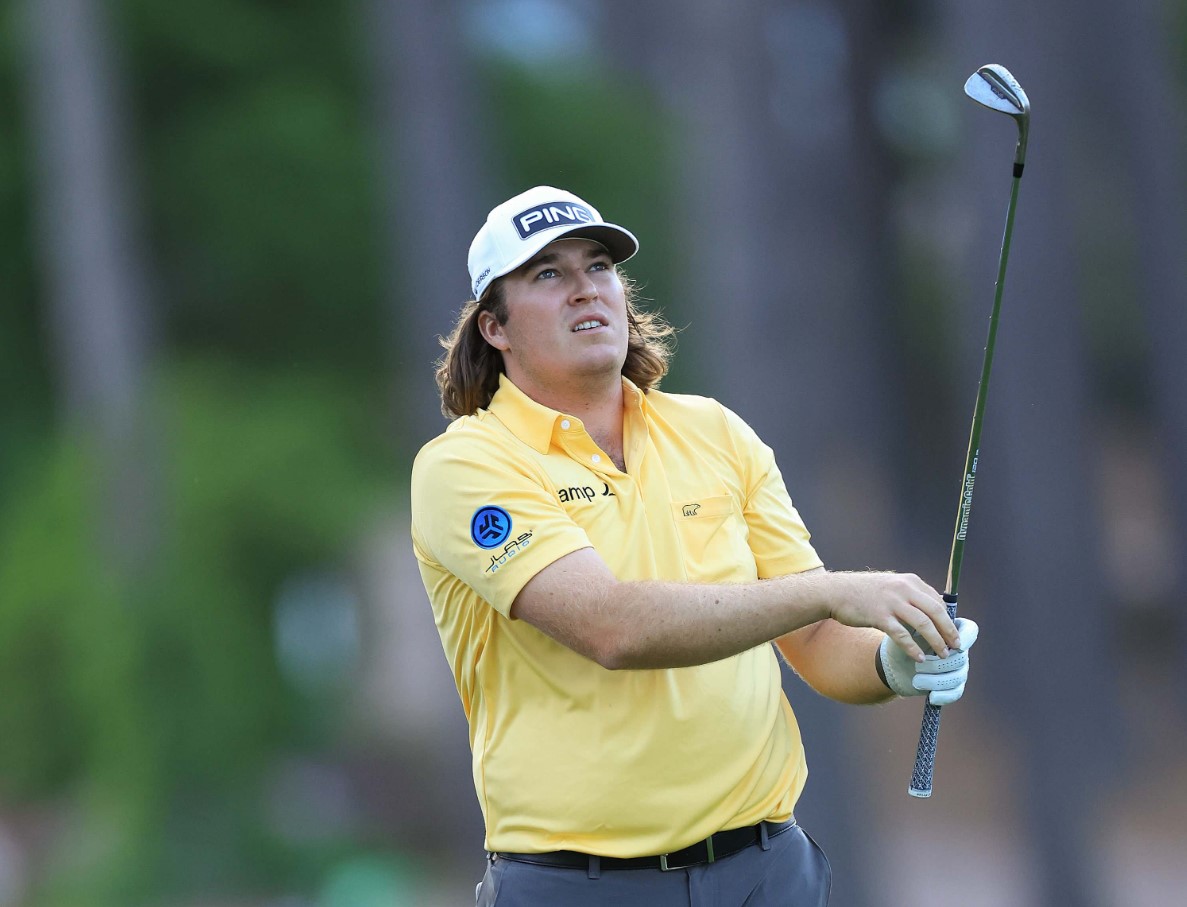
The Masters Tournament at Augusta National Golf Club is known for its prestigious reputation and spectacular golf course. With its world-class agronomy team, sophisticated irrigation system, and state-of-the-art SubAir units, Augusta National is a modern marvel. Despite its modern advancements, the golf course still exudes a throwback charm with its old-timey plantation-style clubhouse, strict no-phone policy, and short strolls between tees and greens.
One unique aspect of the course can be found at holes 9 and 18. The two putting surfaces are not directly adjacent to each other, but they are close enough that if players hit flyers on their approaches, they could potentially find themselves playing their third shots from the adjacent hole. This setup adds an extra layer of challenge and excitement to the game.
During the third round of the Masters Tournament on Saturday, Si Woo Kim found himself facing this challenge. As he stood on the tee box of the 18th hole, he aimed for a towering cut shot that unfortunately cut too much, resulting in his ball landing in the trees on the right side of the fairway. With limited options due to the trees blocking his path, Kim attempted a low hard fade with a fairway wood towards the green. However, his ball didn’t fade as planned.
The cries of “left!” and “forrre!” filled the air as Kim’s ball missed the green and rolled near the edge of the 9th fairway. Dozens of patrons gathered in this area, creating a commotion and adding to the complexity of the situation. Meanwhile, Patrick Cantlay and Neal Shipley, the low amateur at the tournament, were making their way down the 9th fairway and couldn’t immediately grasp what was happening ahead.
“We were just there waiting for them to clear patrons, do something,” Shipley shared after the round. “We were just really confused. We were standing there for a while, and somebody from the side told us, ‘Oh, that was actually a player on 18.’”
Time was of the essence, as delays in big-time golf tournaments can impact the overall pace of play. Moving a large number of people takes time, and playing shots from unfamiliar spots and angles can further extend the duration. At Augusta National, known for its intricate design and challenging layout, these factors can significantly affect players’ performance. Shipley estimated that it took approximately “seven or eight minutes” for Kim to clear out and for them to resume play, causing them to fall behind in pace.
An official approached Shipley and Cantlay, urging them to close the gap and regain their position on the leaderboard. This request is not uncommon, as maintaining an appropriate pace of play is crucial during competitive golf tournaments.
It’s worth mentioning that Cantlay has often faced criticism for his perceived slow pace of play. During last year’s Masters Sunday, he was paired with Viktor Hovland, one grouping ahead of Brooks Koepka and winner Jon Rahm. Following the round, Koepka expressed frustration about Cantlay and Hovland’s pace, which some interpreted as directed specifically at Cantlay. However, Shipley defended Cantlay, stating that he is actually a quick player despite his reputation.
“I know he has a bad rep for playing slow, but he actually is a pretty quick player,” Shipley shared. “He takes a little bit longer over the ball, but he’s really quick in making his decisions. It’s kind of a shame that he has that reputation because it’s really not bad at all.”
Despite the delay and the challenges faced on the course, both Shipley and Cantlay continued their pursuit of success at the Masters. Shipley finished the round with a score of 80, placing him eight over for the week and 15 strokes behind Scottie Scheffler’s lead. Cantlay, on the other hand, shot a solid 70, bringing him to an even score for the tournament, seven strokes behind the leader.
Frequently Asked Questions (FAQs):
Who were Patrick Cantlay’s playing partners during the third round of the Masters Tournament?
Patrick Cantlay played alongside Neal Shipley, the low amateur at the tournament.
How did the delay occur during Patrick Cantlay’s round?
The delay occurred when Si Woo Kim’s approach shot on the 18th hole landed near the 9th green, requiring time to clear the area and resume play.
Did Patrick Cantlay’s reputation as a slow player affect his performance in this round?
According to Shipley, Cantlay’s reputation as a slow player is undeserved, as he is quick in making his decisions on the course.
What were the final scores for Neal Shipley and Patrick Cantlay after the third round?
Neal Shipley finished with a score of 80, while Patrick Cantlay shot a 70, placing them eight over and even for the tournament respectively.
\Who is currently leading the Masters Tournament?
Scottie Scheffler is currently leading the Masters Tournament.
Leave a Reply