
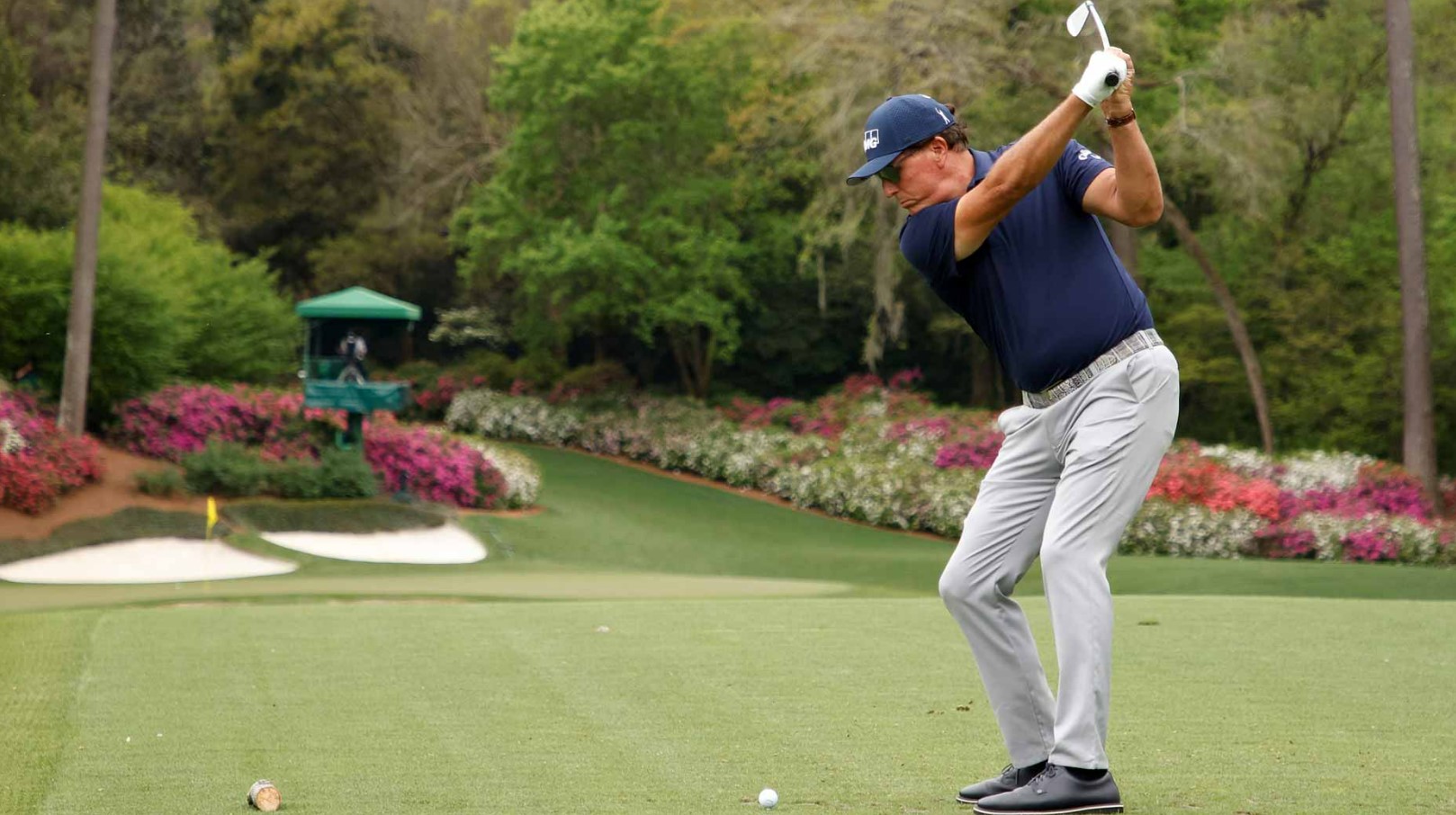
Phil Mickelson, the left-handed player with an unconventional and bold style, took an unconventional approach on the 9th hole during the second round of the Masters. Instead of playing the traditional tee shot, Mickelson chose to tee off over patrons and trees on the adjacent 1st hole. This unique strategy showcased Mickelson’s shot dispersion and showcased his attacking mentality on the course.
Understanding Augusta National and its Unique Challenges
The Masters and Augusta National present different challenges for each player. Mickelson believes that what works for one player may not work for another. Some players prefer drawing the ball, while others prefer fading it. Additionally, some players feel comfortable attacking pins aggressively, while others opt for a more conservative approach. As a left-handed player, Mickelson has a different shot dispersion, which influences his strategy and comfort level on the course.
Learning to identify which holes are comfortable to attack and which holes require a conservative approach is crucial for success at Augusta National. Mickelson emphasizes that players must understand their strengths and weaknesses and adjust their strategy accordingly. This battle of making strategic decisions adds to the excitement and challenge of playing at Augusta National.
Mickelson’s Unconventional 9th Hole Strategy
Mickelson’s decision to tee off over patrons on the 9th hole was certainly unconventional. However, Mickelson has never been one to conform to the norm. Known for his bold and colorful style, Mickelson aimed to gain a different perspective on this challenging hole.
Positioned on the right side of the tee, Mickelson opened his feet about 10 degrees to the left, preparing for a leftward shot trajectory. As he took his swing, the ball soared towards the left, narrowly avoiding trees and patrons’ heads. The surprising shot landed on the left side of the 1st fairway, leaving other spectators curious about its origin.
The Strategy Behind Mickelson’s Unorthodox Move
While Mickelson didn’t elaborate on his decision, there are a few possible explanations for his unconventional move. During the second round, Mickelson had experimented with a leftward shot from a straight setup. This alternative tee shot provided a different angle to attack the back-right pin, bypassing the challenging false front of the green. Mickelson also witnessed the potential of his shot during the first round when he hit straight down the middle.
Although Mickelson wasn’t in contention at this point, he thought it was worth taking the risk. Mickelson saw an opportunity to approach the hole from a different angle, potentially avoiding some of the obstacles he would face with a traditional tee shot. This unconventional move demonstrated Mickelson’s creativity and willingness to try something different.
Mickelson Executing his Plan
Mickelson’s execution on his second shot was just as impressive as his unique strategy. The ball landed short of the flag, rolled past it, and then rolled backward towards the hole. It came to a rest about 10 feet away from the cup on the right side of the green. Mickelson made a two-putt for par, finalizing his unorthodox approach to the 9th hole.
Frequently Asked Questions (FAQs):
Did Mickelson’s strategy pay off?
Mickelson’s strategy to tee off over patrons on the 9th hole allowed him to approach the green from a different angle, potentially avoiding certain obstacles. Although he settled for par, his unconventional move showcased his creativity and willingness to take risks.
How does Augusta National challenge players?
Augusta National presents unique challenges for each player. The tight fairways, false fronts on greens, and strategically placed bunkers require players to carefully plan their shots. The course demands a combination of skill, strategy, and adaptability to contend for the green jacket.
What is Mickelson’s shot dispersion, and how does it influence his strategy?
Mickelson’s shot dispersion refers to the pattern in which his shots land. As a left-handed player, Mickelson’s shots have a natural curve to the right. This influences his strategy and comfort level when attacking certain pins or navigating tight fairways.
What is the importance of understanding one’s strengths and weaknesses at Augusta National?
Understanding one’s strengths and weaknesses at Augusta National assists in making strategic decisions. Identifying which holes are comfortable to attack and which holes require a conservative approach can lead to more successful outcomes. Adjusting the game plan based on individual strengths supports a player’s chances of performing well in the tournament.
Leave a Reply