
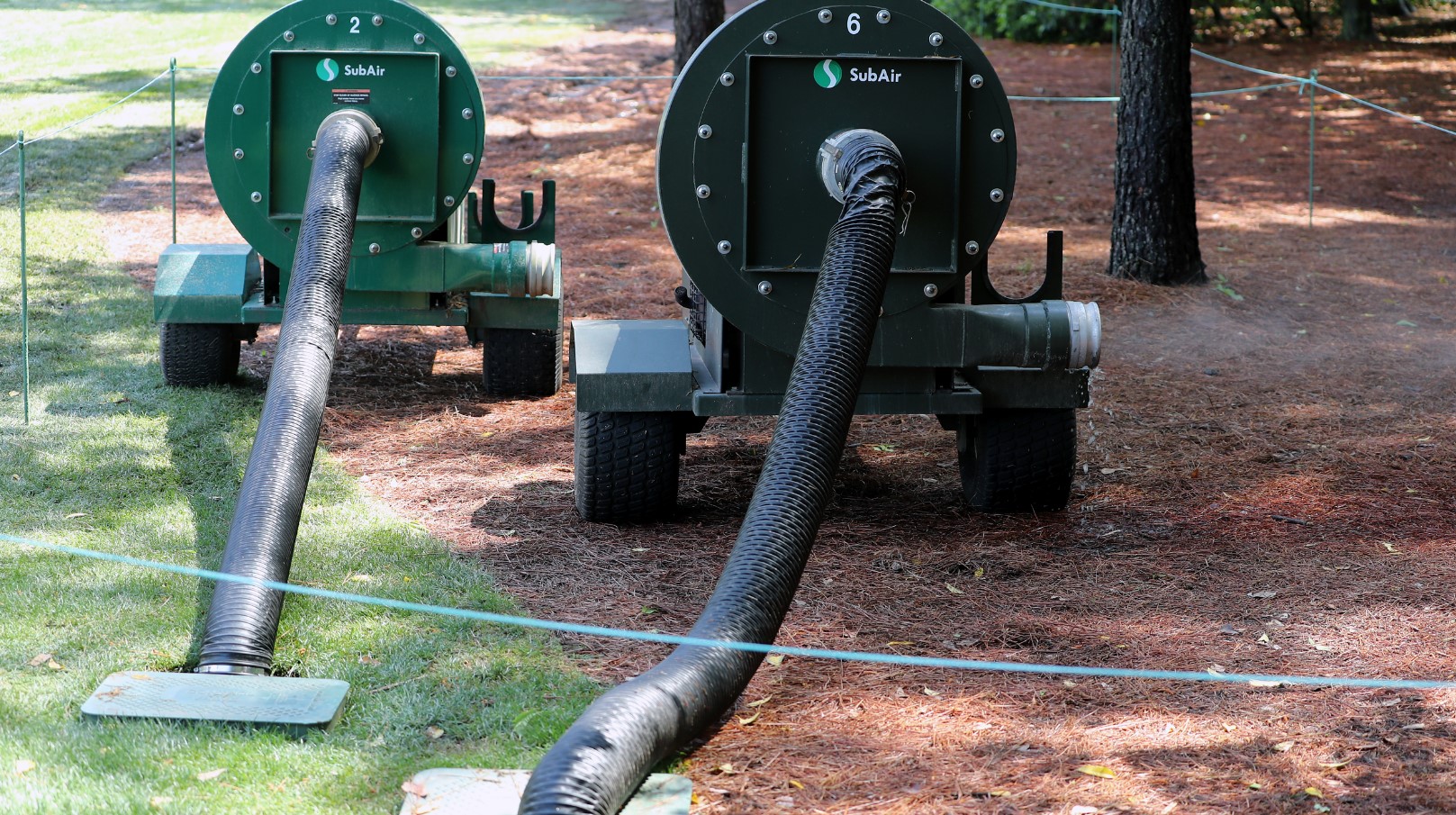
When it comes to maintaining the pristine conditions of Augusta National Golf Club, one factor stands out as a testament to the club’s unwavering commitment to excellence – the SubAir system. This innovative subterranean turf-care technology is a vital element in keeping the greens firm and fast, even in the face of heavy rain. Let’s delve into the details of this underground marvel and explore how it works.
Whenever the skies open over Augusta National, the club’s SubAir system kicks into gear. Its efficiency has become renowned, with countless stories circulating during Masters week about its remarkable capabilities in managing the impact of inclement weather.
What Exactly is SubAir?
SubAir is not just a single system but a broader category of underground technologies developed by various manufacturers. The brand name has become synonymous with these cutting-edge systems that utilize drainage pipes to facilitate the movement of air beneath putting greens. According to Darin Bevard, the USGA green section senior director of agronomy, SubAir systems differ in their functionalities. Some systems solely focus on air movement, while others offer the additional capability of temperature regulation, enabling adjustments to the soil temperatures on the greens.
The Intricate Components
A SubAir system comprises an intricate network of pipes, pumps, vacuums, valves, panels, and sensors that work together harmoniously to expel excess moisture from the subsoil while simultaneously introducing fresh oxygen. The sophisticated design of these systems allows for precise control over the soil’s temperature, with potential temperature adjustments of 6 to 8 degrees. This temperature moderation can significantly extend the growing season for the turf, as it aids in awakening the plant or providing relief from heat stress. The systems can be managed manually, scheduled on timers, or activated remotely via computers or smartphones.
Understanding the Limitations
It’s essential to acknowledge that while SubAir systems are often hailed as game-changing solutions, they are not magic fix-alls. In the face of prolonged extreme weather conditions, even the most advanced moisture-sucking and temperature-regulating capabilities of a SubAir system may not be enough to make the greens playable. The 2023 Masters is a prime example, as heavy rain led to delays on both Friday and Saturday. A crucial factor influencing the effectiveness of SubAir systems is the overall health of the turf. Greens burdened with excessive thatch, which refers to a thick layer of dead organic material between the grass blades and the soil, are more likely to retain moisture and remain spongy, even with a SubAir system diligently operating. At Augusta National, poor turf health is not an issue, showcasing their commitment to providing optimal playing conditions. Nevertheless, nature ultimately has the final say.
Cost Considerations
When it comes to the price tag of implementing a SubAir system, the specific system and the size of the greens are determining factors. Industry sources have estimated an average cost of approximately $25,000 per green. However, package deals can offer more affordable options, with costs per system decreasing as the number of greens equipped with SubAir systems increases. It’s worth noting that Augusta National Golf Club, with its legendary status, is known for sparing no expense when it comes to maintaining the course.
Frequently Asked Questions (FAQs):
What is a SubAir system?
A SubAir system is an underground turf-care technology that utilizes drainage pipes to move air beneath putting greens. It helps maintain optimal playing conditions by expelling excess moisture and regulating soil temperatures.
How does a SubAir system work?
A SubAir system consists of pipes, pumps, vacuums, valves, panels, and sensors. These components work in unison to remove excess moisture from the subsoil and introduce fresh oxygen. The system can also control the soil’s temperature, aiding in turf health and extending the growing season.
Can a SubAir system overcome all weather challenges?
While SubAir systems offer advanced capabilities, they are not immune to the limitations imposed by extreme weather conditions. If the weather persists in adverse conditions for an extended period, even a SubAir system may struggle to make the greens playable.
What factors affect the effectiveness of a SubAir system?
A green’s overall turf health significantly impacts the effectiveness of a SubAir system. Excessive thatch, the layer of dead organic material between grass blades and the soil, can impair the system’s ability to maintain optimal playing conditions.
How much does a SubAir system cost?
The cost of a SubAir system varies depending on the specific system and the size of the greens. On average, industry sources estimate the cost at around $25,000 per green. Package deals may provide cost savings for multiple system implementations.
Is price a concern at Augusta National?
For Augusta National Golf Club, renowned for its commitment to excellence, price is never an obstacle when it comes to investing in state-of-the-art equipment and technologies, ensuring unparalleled playing conditions.
Leave a Reply