
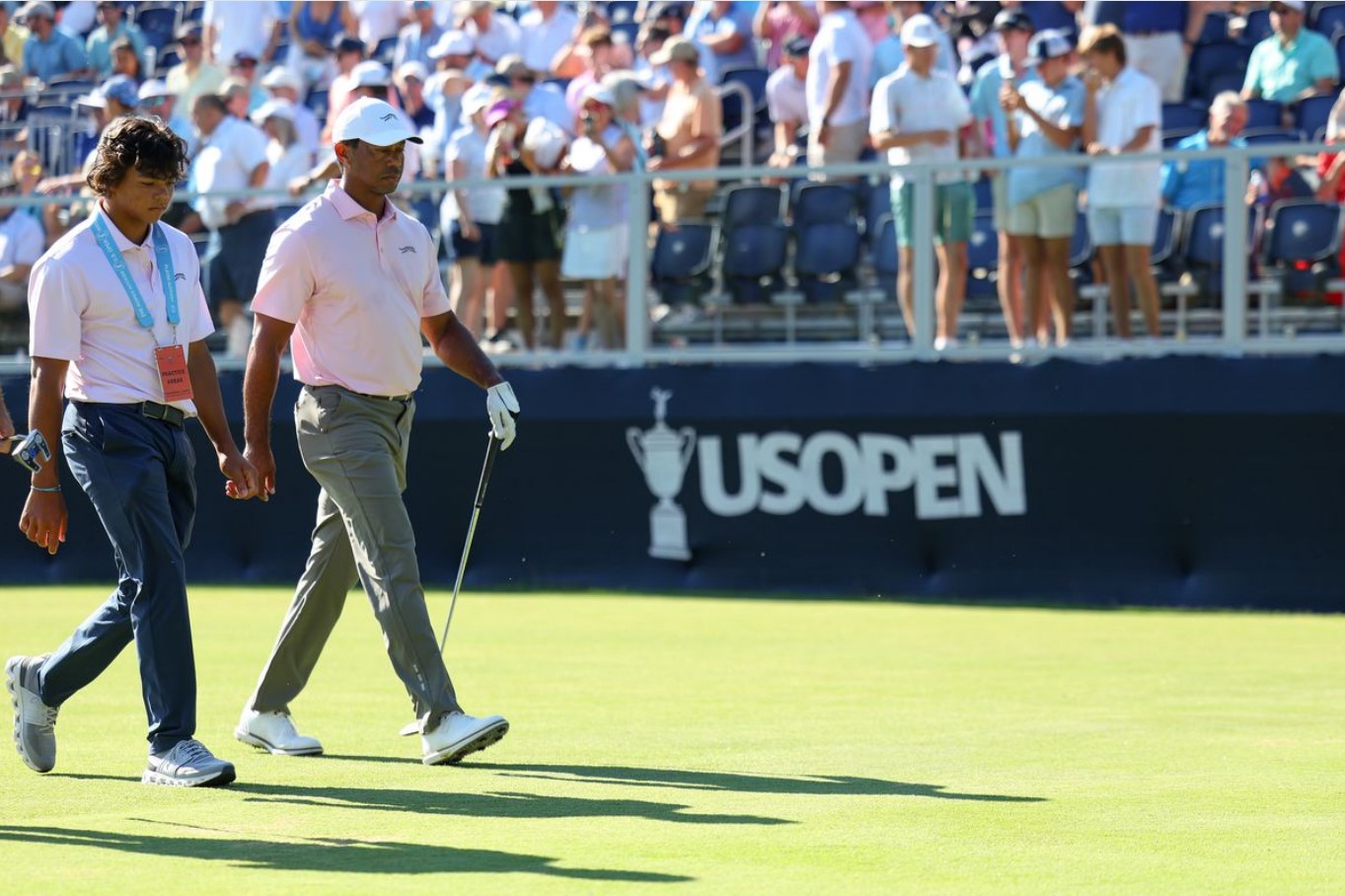
We are witnessing a unique strategy at the U.S. Open this year as Tiger Woods, a seasoned champion with fifteen major titles, leverages an intimate father-son dynamic to enhance his game. With his son Charlie sporting a player support badge, Woods is utilizing familiar eyes and a trusted perspective to navigate the pressures of Pinehurst No. 2. This approach not only underscores the value of family in professional sports but also illustrates a nuanced layer of strategy in major tournaments.
Role of Junior Golf Experience in Professional Settings
Charlie’s involvement goes beyond mere companionship. As a budding junior golfer, his role as player support converges his growing understanding of the game with his father’s extensive experience. This fusion brings fresh insights to Woods’ game, especially in critical areas like putting. The subtle nuances and reminders from a significant yet tender age underscore the complexity and mental discipline required in golf, particularly at such a prestigious level as the U.S. Open.
Insights During Practice Rounds
The inclusion of Charlie in the practice rounds, alongside renowned golfers Max Homa and Min Woo Lee, enriches this tournament experience. Not only does this interaction highlight the evolving nature of learning and mentorship in golf, but it also provides Charlie a real-time glimpse into the world of professional golf, bridging generational gaps and experiential learning.
Challenges and Adaptations at Pinehurst
The Donald Ross-designed Pinehurst No. 2, renowned for its turtleback greens, presents a formidable challenge, testing every aspect of a golfer’s skillset. Woods’ focus during practice on adapting to these greens, along with his strategic pre-tournament visits, showcases his meticulous approach to preparation and adaptability, crucial for contending at a major level.
Physical Recovery and Mental Fortitude
Amidst recovery from significant injuries, Woods remains confident in his return to form. His commitment to strengthening both physically and mentally post-injury highlights the resilience and dedication needed to compete at the highest levels of golf. The mental rigor required for Pinehurst’s challenging layout is immense, and Woods’ preparedness speaks volumes about his determination and professional ethos.
The Honor of the Bob Jones Award
This tournament is also a moment of prestigious recognition for Woods as he is set to receive the Bob Jones Award. Tying with Jones himself in terms of USGA championships, Woods is on the brink of making history. This accolade, celebrating both his and Jones’ contributions to golf, adds a profound layer of historical significance to his participation in this year’s U.S. Open.
Frequently Asked Questions (FAQs)
What makes Pinehurst No. 2 particularly challenging?
The Coore-Crenshaw restoration has accentuated the already demanding features of the course, notably the turtleback greens which demand precise approaches and putts.
How does Tiger Woods prepare for such a challenging course?
Woods emphasizes a combination of physical rehearsals at home and strategic practice rounds on the course to fully adapt to the unique challenges of Pinehurst.
What significance does the father-son dynamic bring to Tiger Woods’ game?
This unique dynamic introduces both a calming presence and a trusted advisory role, focusing on in-depth game strategy and mutual growth in the sport.
Leave a Reply