
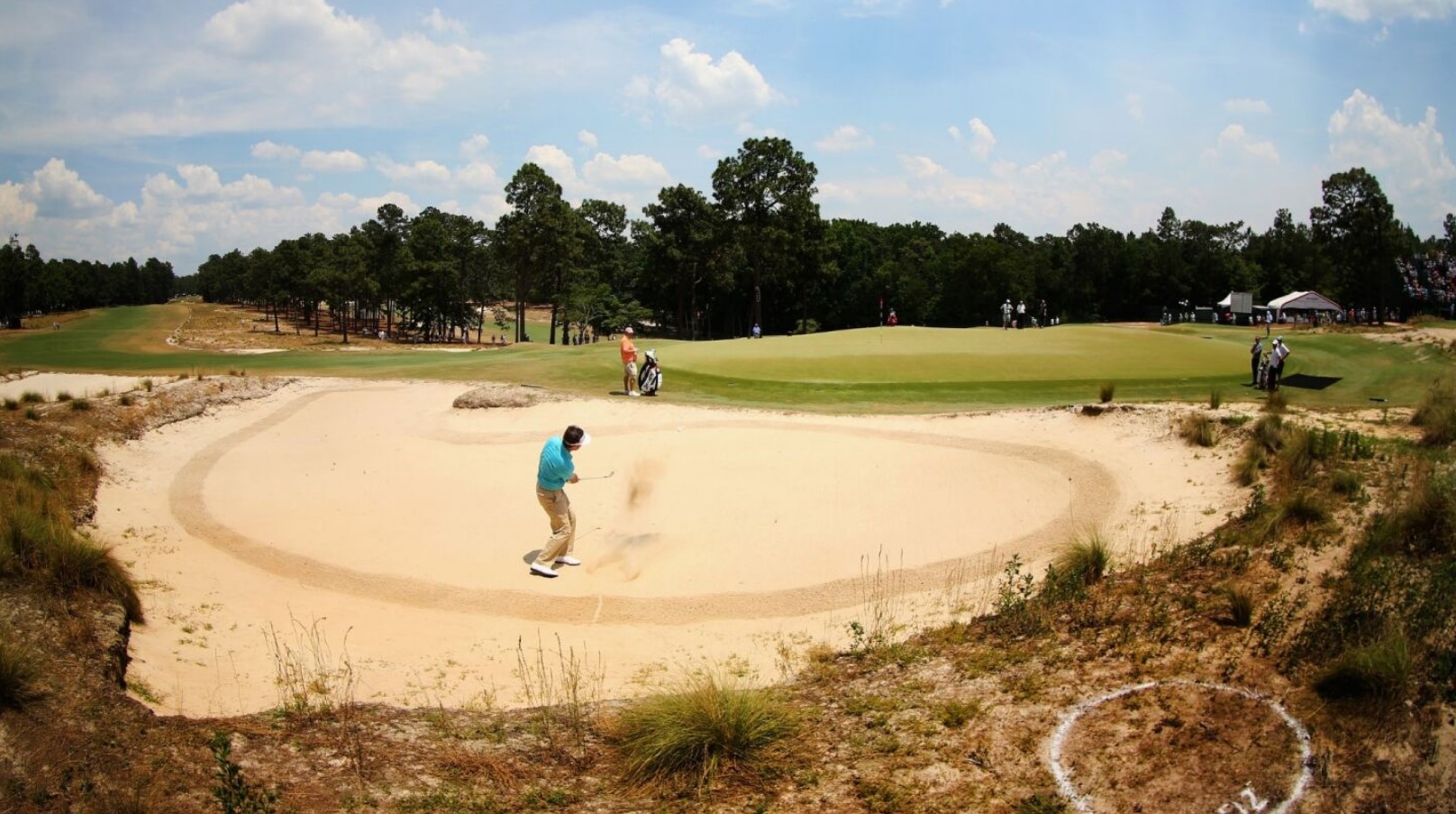
We understand that Pinehurst No. 2 stands as an exemplar of classic golf challenges. Renowned for its distinctive features, this Donald Ross masterpiece demands precision and strategic acumen. The turtleback greens, a hallmark of the course, are designed to test even the most seasoned golfers. The baked-out turf, wire grass, and native areas add distinct layers of difficulty, pushing players to be precise in every shot.
Strategic Insights from Michelle Wie West’s 2014 Major Victory
Reflecting on her monumental win at the 2014 U.S. Women’s Open, Michelle Wie West emphasizes the importance of positional awareness on this unique U.S. Open venue. Notably, she advises golfers to focus on being on the correct side of the greens to avoid challenging recoveries. Her victory is a testament to mastering this art, as she navigated the Ross turtleback greens with exceptional skill.
Historical Overview of Pinehurst No. 2’s Major Tournaments
Over the years, Pinehurst No. 2 has seen unforgettable moments from Payne Stewart’s iconic 1999 U.S. Open win to Martin Kaymer’s dominant performance in 2014, alongside Michael Campbell’s notable victory in 2005. Each of these champions displayed unparalleled mastery over the course’s rigorous layout and challenges, showcasing the key to conquering this demanding course.
Course Characteristics: Turtleback Greens and Native Grasses
The notorious turtleback greens of Pinehurst No. 2 are designed to repel poorly aimed approach shots, often leaving the ball to roll off the greens into challenging recovery positions. Furthermore, recent modifications have increased the density of wire grass and fescue, heightening the difficulty of the native areas. These features require high precision to maneuver successfully and underscore the significant role of accuracy in golf on this course.
Frequently Asked Questions (FAQs):
What makes Pinehurst No. 2 a unique challenge in major tournaments?
Pinehurst No. 2 distinguishes itself with its baked-out conditions, native wire grass, and the infamous Ross turtleback greens which demand specific tactical executions to manage the difficulty of each shot.
How have recent changes to Pinehurst No. 2 affected play?
The integration of increased wire grass and fescue has intensified the challenge, particularly in the native areas, rewarding accuracy and strategic foresight more than ever before.
What is necessary for a golfer to triumph at Pinehurst No. 2 during major championships?
Success at Pinehurst No. 2 hinges on precise shot-making, particularly with regards to landing positions on greens and avoiding punitive native areas. Ultimately, each golfer’s ability to adapt their championship golf tactics to these conditions plays a vital role in their performance.
Leave a Reply