
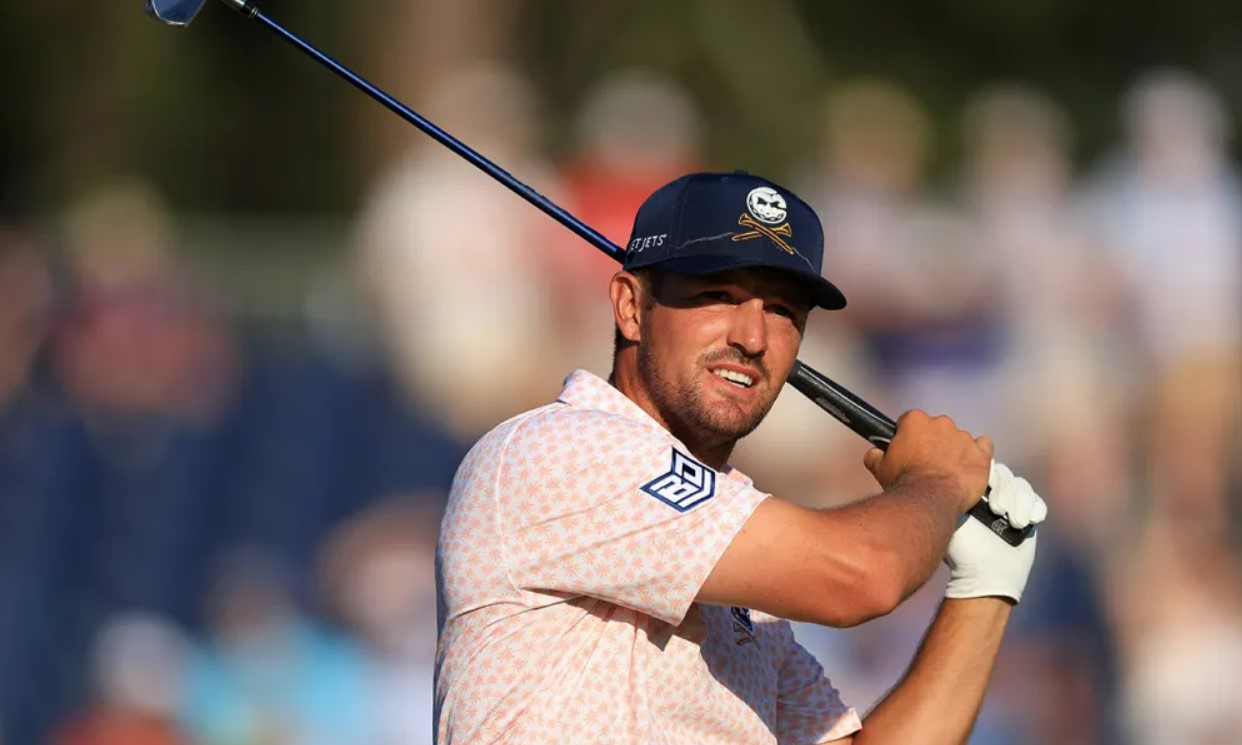
As the Olympic golf competition approaches, the finalized field reveals a powerhouse display from Team USA, though not without a conspicuous absence. The elite U.S. squad, trailing their strides across the iconic Olympic rings, showcases top-tier talent poised for the Paris Olympics showdown, yet the exclusion of Bryson DeChambeau, a luminary in his own right, echoes across discussions. This twist stems from his insufficient participation in the required 72-hole tournaments, critical for Olympic qualification, reflective of an adherent yet rigorous Olympic golf qualification system.
Understanding Team USA’s Formidable Line-Up
We now see a compelling mix of experience and fresh enthusiasm in Team USA’s lineup heading to Paris. Scottie Scheffler arrives as the crown jewel of golf, ranking supreme globally, while Xander Schauffele, the resilient defending Gold medalist, aims to repeat his heroic feats. Accompanying them are Wyndham Clark, embracing his inaugural Olympic appearance with vigor, and Collin Morikawa, whose previous near podium finish leaves him hungry for triumph. As the top-tier representatives from the United States, their participation bolsters Team USA’s reputation in global golf contests.
NBC’s Role in Olympic-Golf Campaigning
Amplifying the excitement, NBC Olympics broadcast has strategically spotlighted the stellar performances and intense qualifiers leading up to the Paris Olympics. This not only enhances viewer engagement but significantly strengthens the promotional thrust for Team USA. NBC’s coverage has been instrumental in framing the narratives around Olympic golfing and its athletes, setting a dramatic stage for the forthcoming games.
The Ripple Effect of DeChambeau’s Choices
Bryson DeChambeau’s trajectory through the golfing world has indeed been distinctive. Anchoring his professional endeavours predominantly in LIV Golf’s circuits, known for their 54-hole tournaments, he faces the consequential limitations in the Official World Golf Ranking (OWGR). These limitations pivot prominently as DeChambeau finds himself ranked outside the essential top-tier threshold to qualify for the Olympics under current regulations, which exclusively recognize the traditional 72-hole formats. Despite achieving a rank within the dominant echelons globally according to DataGolf, the divergence in ranking systems delineates a significant barrier to his Olympic aspirations.
Emergence of New Talents and Internal Rivalries
Internationally, the Olympic golf landscape is witnessing vigorous shifts. With Corey Conners edging past Adam Hadwin to represent Canada and young phenom David Puig overtaking Jorge Campillo for Spain, the global competition intensifies. These instances of neck-and-neck qualification underscore the ferocious jockeying within international golf tournaments, revealing both the pressures and the high stakes involved in securing an Olympic berth.
Frequently Asked Questions (FAQs):
What is the qualification criterion for Olympic golf?
The Olympic golf qualification largely mirrors the Official World Golf Ranking (OWGR) system, evaluating professional performance over the previous two years. A country can enter a maximum of two golfers unless they rank in the global top 15, where a richer golfing nation like the U.S. could send up to four if all are top 15 members.
Why do LIV Golf tournaments not count towards OWGR points?
LIV Golf’s 54-hole format does not meet the OWGR’s criteria for ranking points, which are predominantly awarded based on 72-hole tournament results. This has sparked considerable debate and controversy, notably with implications for players like DeChambeau who participate predominantly in LIV events.
How does NBC enhance Olympic golf viewership?
NBC leverages its broadcast strategy to enhance the allure and anticipation around Olympic golf by emphasizing key matchups, stellar performances, and the intense qualification journey. This focused broadcasting approach significantly contributes to elevating the sport’s profile during the Olympic period.
Leave a Reply