
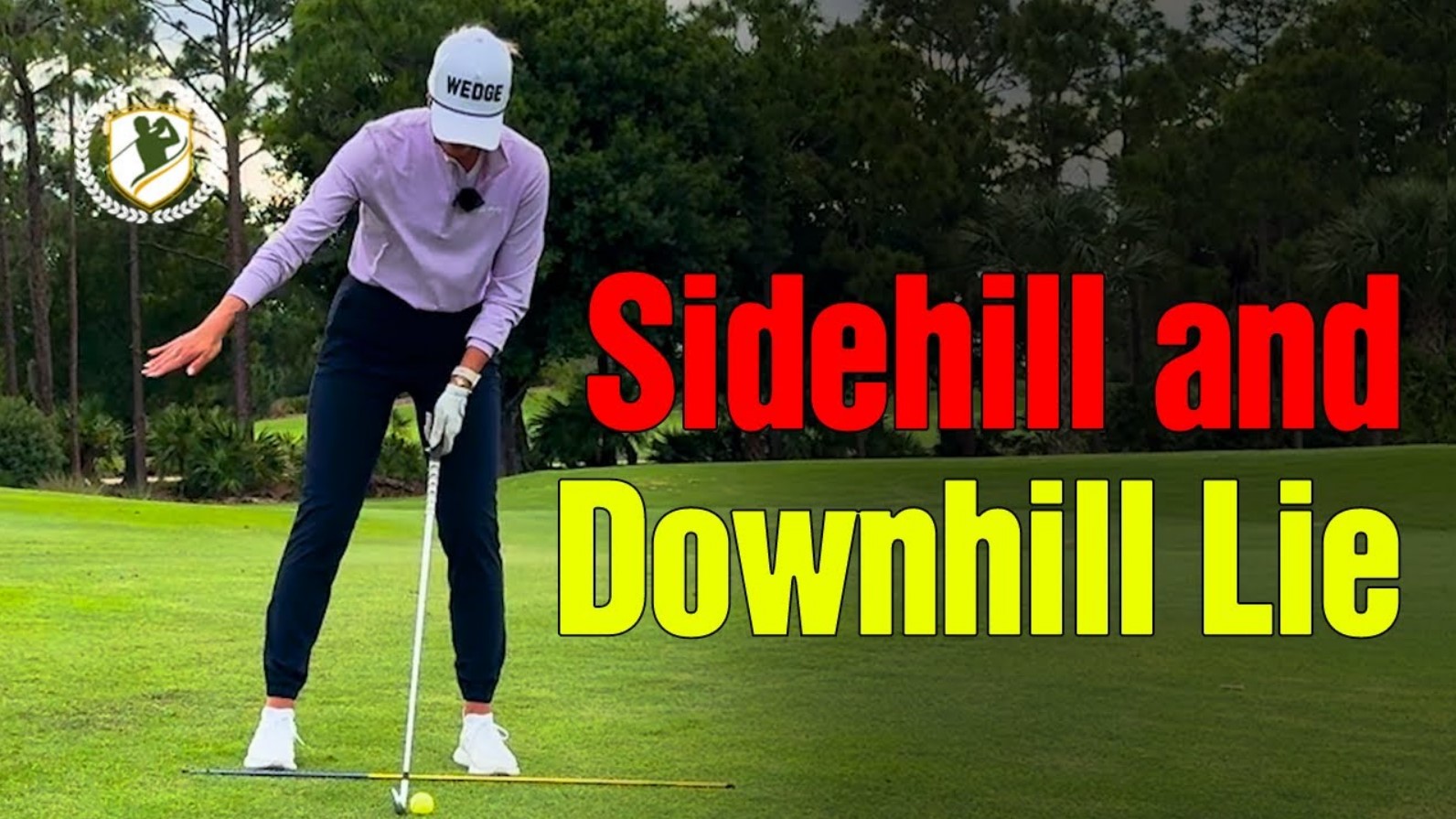
When faced with a side-hill lie, where the ball is positioned below your feet, it presents a unique challenge that requires precise adjustments to both your setup and your swing. Such lies, commonly encountered in courses like Hansen Dam GC and PGA WEST Golf Academy, demand specific approaches to ensure success.
Key Setup Adjustments for Side-Hill Lies
To effectively navigate side-hill lies, start by selecting a club that is one longer than you would normally use for the given distance. This adjustment accounts for the lower stance and aids in reaching the desired distance despite the slope. Positioning the ball up in your stance is crucial, as it compensates for the slope incline. This, combined with a leftward aim, prepares you for a natural ball trajectory that tends to fade or move right due to the lie angle.
Adapting Your Swing on Side-Hill Lies
Maintaining a strong posture is essential when the ball is below your feet. Flex your knees adequately to lower your body closer to the ball, alleviating the need to bend your back and ensuring a more controlled swing. Embrace the fade by aiming slightly left of your intended target, allowing the ball’s natural path to curve toward the goal.
During the swing, focus on executing an outside-in attack pattern. Visualize the club moving back up the hill during the follow-through, which helps in avoiding the common mistake of striking the ground behind the ball. This swing path encourages a clean contact and leverages the slope to enhance the ball’s flight towards the target.
Keeping Your Lower Body Stable
A quiet lower body is paramount in achieving consistency from a side-hill lie. Limit the movement of your legs and hips to prevent excessive force that can destabilize your swing. This stability is crucial for ensuring that the upper body and arms can perform the necessary maneuvers to execute a successful shot under these challenging conditions.
Frequently Asked Questions (FAQs):
What is the main reason for taking an extra club on a side-hill lie?
Using a longer club compensates for the reduced swing arc and decreased power resulting from the awkward stance, helping to ensure the ball reaches its intended distance.
Why should the ball be positioned up in the stance?
Positioning the ball up in the stance helps in reaching the ball effectively without needing to bend excessively, ensuring a more stable and powerful swing.
How does aiming left help in side-hill lies?
Aiming left accommodates the natural fade of the ball caused by the slope, allowing it to curve towards the target.
Leave a Reply