
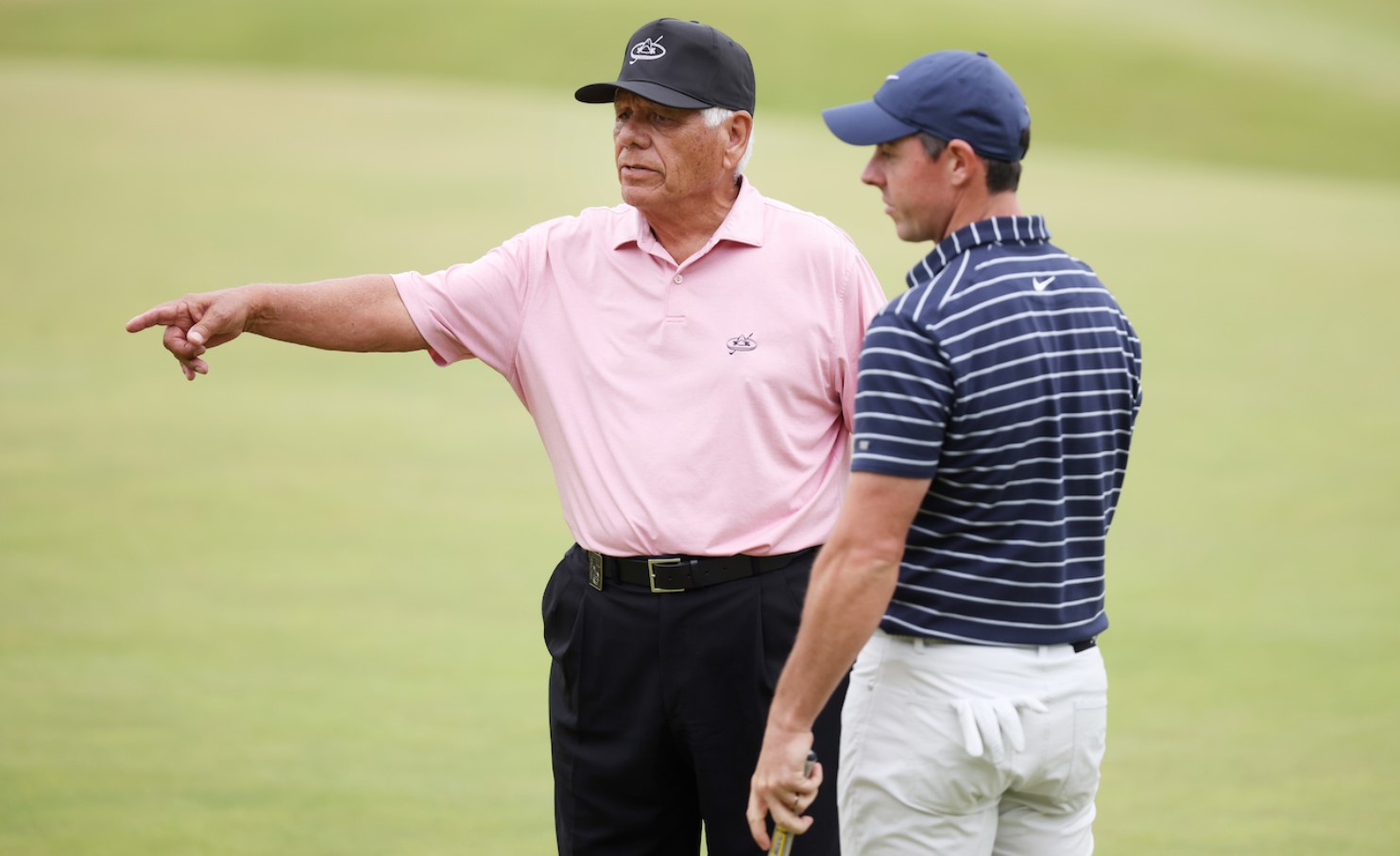
In the high-pressure environment of major golf tournaments, even seasoned professionals face challenges that can alter the course of their careers. Notably, Rory McIlroy’s recent performance at the U.S. Open provides a vivid example. Despite leading by several strokes leading into the final five holes at Pinehurst, McIlroy faced a series of setbacks that significantly impacted his game.
The Pivotal 15th Hole at Pinehurst
Critical moments often define the outcome at major tournaments like the U.S. Open. For McIlroy, Pinehurst’s 15th hole was such a moment. An oversight in club selection led to a bogey, beginning a cascade of similar errors. Following this, McIlroy putts missed on the 16th and the final 18th hole, with each misstep contributing further to his unexpected second-place finish.
Bryson DeChambeau’s Clinching Performance
Contrasting McIlroy’s series of unfortunate plays, Bryson DeChambeau seized the opportunity to shine. His extraordinary 55-yard bunker shot landed mere feet from the 18th hole. This memorable stroke not only clinched his victory but also marked one of the major’s most impressive plays.
Lee Trevino’s Commentary on Resilience in Golf
Lee Trevino, a veteran with six major titles, discussed these intense moments during his appearance on the Sirius XM golf show, “A New Breed of Golf.” He shared valuable insights into the psychological resilience required in golf, especially highlighting McIlroy’s challenging putt on the 18th as an example of the complexities involved in such high-stakes games. “The putt that Rory had was the hardest putt in the world… that thing was slick, and it broke right,” Trevino explained, illustrating the almost impossible task of maintaining precision under immense pressure.
Exploring Golf Shot Difficulties and Tournament Pressures
Golf tournaments test players not just in skill but in mental fortitude. Discussing the intricacies of tough golf shots, Trevino shed light on how dealing with a challenging bunker shot involves not only technical skill but also a strong strategic mindset. “You got to get some ball out there… you can’t throw that sand that far,” he detailed, speaking to the demanding nature of precise golf shots in crucial moments.
Rory McIlroy’s Reflections and Recovery
After Pinehurst, Rory McIlroy took a reflective break, walking New York’s High Line, decompressing away from the golf scene before returning to compete at the Genesis Scottish Open. His recount of the events at Pinehurst during a press conference revealed his analytical approach to the game, noting how he “took control of the golf tournament. Holed putts when I needed to,” yet acknowledging the impact of those few critical missed shots.
Rory’s Career and Ongoing Resilience
McIlroy’s career has been characterized by his ability to transform challenging experiences into lessons and subsequent successes. This spirit of resilience mirrors our approach to golf, where understanding and learning from every shot, particularly the tough ones, shapes a player’s path to mastery. Each tournament offers a new set of challenges, but also new growth opportunities, echoing Trevino’s advice and McIlroy’s ongoing career journey.
Through these reflections and expert insights, it becomes clear that success in golf is as much about precision and skill as it is about overcoming psychological and tactical challenges that define the game’s most tense and memorable moments.
Frequently Asked Questions (FAQs):
What were the key challenges Rory McIlroy faced at the U.S. Open?
Rory McIlroy faced significant challenges during the U.S. Open at Pinehurst, particularly on the 15th hole where a club selection error led to a bogey. This misstep, followed by missed putts on the 16th and 18th holes, contributed to his unexpected second-place finish despite leading earlier in the tournament.
How did Bryson DeChambeau’s performance contrast with McIlroy’s?
Bryson DeChambeau’s performance contrasted sharply with McIlroy’s as he capitalized on McIlroy’s setbacks. His remarkable 55-yard bunker shot on the 18th hole, which landed close to the hole, was a pivotal play that secured his victory and highlighted his ability to seize opportunities under pressure.
What insights did Lee Trevino offer about McIlroy’s performance and golf in general?
Lee Trevino, speaking on “A New Breed of Golf,” emphasized the psychological resilience required in golf. He noted that McIlroy’s challenging putt on the 18th was particularly difficult, illustrating the pressure of major tournaments. Trevino also discussed the importance of mental toughness and strategic mindset, stressing how critical it is to manage both technical skill and psychological pressure in golf.
Leave a Reply