
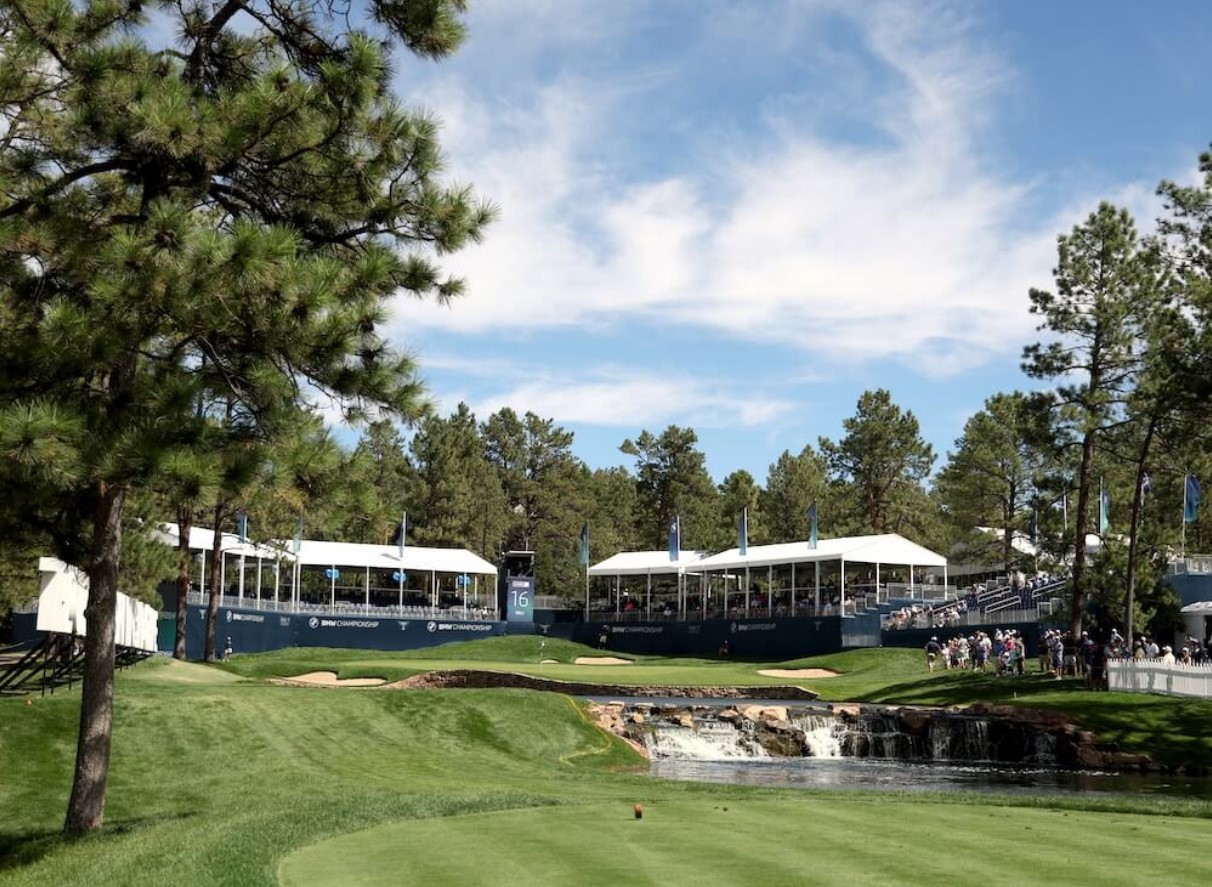
We at Team United States are gearing up for a unique challenge as we return to Castle Pines for the first time since 2006. Known for its daunting length and strategic complexities, Castle Pines has stretched even further this year, boasting a remarkable distance of 8,130 yards. This demanding expanse not only reaffirms its reputation as a course for power players but also tests our adaptability and precision under unusual playing conditions.
Adapting to Altitude: The Player’s Perspective
The most immediate and impactful challenge we face is the Colorado altitude. The elevation change is not just a number; it significantly alters the game dynamics. On the range, you’ll find us with our TrackMans and other essential measuring devices, meticulously calibrating our swings and estimating the altered distances our balls will travel. This rigorous preparation is critical, as the thin air at elevation is notorious for playing tricks with distance control, which could be as unpredictable as adding 20 yards or more to a typical shot.
Benefits of Advanced Technology in Training
Utilizing advanced technology like TrackMans helps us ensure that our equipment is tuned to the conditions. We focus intensely on these adjustments because a typical 8-iron shot could easily travel differently under these elevated conditions. Our goal every practice day is to understand how our tools perform in this environment, striving for consistency amidst the altitude-induced variations.
Overcoming the Altitude Challenge
While the initial rounds at altitude can lead to overestimations—sending balls flying past the greens—the adaptation period is crucial. You might observe us overshooting by 10 to 15 yards, which, while it might appear as a miscalculation, is often part of dialing in our distance control. By the time competition commences, we aim to be acclimated, making the necessary adjustments to feel as comfortable here as we do at sea level.
Inconsistency in Elevation: A Test of Skill
The inconsistency that comes with elevated play cannot be overstated. At sea level, a 7-iron might reliably cover 185 yards. Here, that same club could vary from 200 to 210 yards on consecutive swings. Such discrepancies pose a unique challenge, requiring us to adapt quickly and learn to trust our recalibrated instincts. This variability means trajectory control becomes as crucial as distance, with each shot requiring careful consideration and strategy.
Strategic Insights from Seasoned Players
Our experience in tournaments across major courses worldwide, including those at altitude, provides us with a foundational understanding of these challenges. Our preparation includes detailed study of course nuances—specific angles to pins and distinct breaks on the greens that might not be immediately apparent to newcomers.
Leveraging Experience for Competitive Advantage
While newcomers might take a couple of rounds to fully adapt, those of us who have previously competed in elevated conditions might find ourselves with a slight edge. The knowledge from previous experiences, combined with less curve on the ball at altitude, allows us to play with increased confidence, transforming challenge into opportunity.
Conclusion
Returning to Castle Pines offers us a rigorous test of our skills and adaptability. By leveraging technology for precise calibrations, understanding the impact of elevation on ball trajectory and distance, and drawing on our past experiences, we are well-prepared to tackle this formidable course. The unpredictability of playing at altitude demands not just physical skill but strategic acumen, making this an exciting, if challenging, venture for all of us.
Frequently Asked Questions (FAQs):
What makes Castle Pines Golf Club a unique challenge?
Castle Pines is known for its length and strategic complexities, now stretching to 8,130 yards. The high Colorado altitude significantly impacts play, affecting distance control and requiring precise adjustments. The thin air can alter shot distances unpredictably, adding to the course’s challenge.
How does altitude affect play at Castle Pines?
The elevated conditions at Castle Pines can cause shots to travel significantly further than at sea level. For example, a typical 8-iron shot might cover 20 yards more due to the thin air. This variability necessitates meticulous adjustments and recalibration of swings to manage distance control effectively.
What strategies do players use to adapt to the altitude?
Players use advanced technology, such as TrackMans, to fine-tune their equipment and understand how their shots behave at altitude. They also focus on practicing at the course to adjust their distance control and trajectory. Experienced players leverage their past knowledge of elevated conditions to gain a competitive edge.
Leave a Reply