
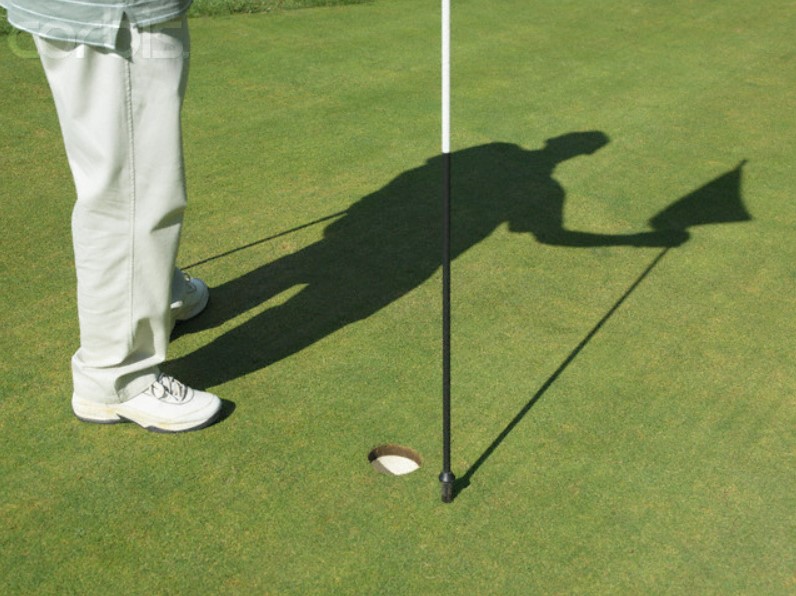
In the realm of golf, handling equipment during play strictly adheres to regulations that maintain fairness and challenge. A common query we often face concerns the legality of placing a club against the flagstick while preparing for a putt. Specifically, during wet conditions on the green, players might be tempted to lean their wedge against the flagstick to avoid dampening the grip.
According to the trusted rule book, this action is allowed under certain conditions. The key points to note are that the club placed against the flagstick should not serve as a tool for aiming, nor should it impact the stroke itself. Any indication that the club aids in these respects might necessitate a penalty or even cause the stroke to be replayed.
Impact of Equipment on Play Outcomes
A classic case to consider involved a stroke-play match where after approaching the green, a player, wanting to keep the grip of his wedge dry, leaned it against the flagstick. On such wet days, this might seem a small tweak but remember, any equipment used in an unauthorized manner can impact the fairness of the play.
The putter used for holing out must be the only equipment assisting your shot unless explicitly allowed by your tournament’s specific rules. In this situation, as long as the wedge does not directly or indirectly alter the play, its proximity to the flagstick is legally permissible.
Strategic Handling of Flag Positions in Play
Another intriguing scenario emerges when players need to decide how the flagstick should be handled. Whether to keep the pin in while putting or to have a playing partner hold it could be decisions that affect the outcome of a hole. Remember, if a ball hits an unattended flagstick left in the hole, the player does not receive a penalty in stroke play, but in match play, his opponent may concede the hole.
These subtle rules differentiate the repercussions in various types of play and could be pivotal in crucial match moments. As all seasoned golfers would affirm, understanding these nuances can be as important as mastering your swing.
When Mistakes Happen
A historic query involves a player haunted by a scenario where during a tournament, his companion, tasked with attending the flagstick, accidentally left it in place causing the ball to deflect. Here, intention plays a huge role. If the pin was left accidentally, the play continues as is. However, if it was intentional, the offending player would face penalties, altering the subsequent play action drastically.
In events where intentions were clear and regulations breached, determining where the ball would have rested and taking appropriate actions follows. These rules ensure that the fundamental challenge of golf remains intact—playing the ball as it lies, dictated only by the player’s skill and the course’s natural setup.
Advanced Rule Queries
For those deeply invested in honing their understanding of golf rules, referring to custom guidelines like a Green Book can provide in-depth insights. These resources are designed to clarify doubts and elevate one’s knowledge and strategy for the game.
Moreover, engaging with fellow golf aficionados or experts through rule-centric discussions or querying platforms can further enhance one’s comprehension and application of golf rules on the field. Such interactions enrich the player’s experience and deepen their appreciation of golf’s complex, strategic nature.
Frequently Asked Questions (FAQs):
Can you lean your club against the flagstick while putting?
Yes, you can lean your club against the flagstick, but it must not be used to aid in aiming or affect the stroke. If the club assists in any way, it may result in a penalty.
What happens if your ball hits an unattended flagstick?
In stroke play, hitting an unattended flagstick does not result in a penalty. In match play, your opponent may choose to concede the hole.
What should you do if the flagstick accidentally affects your play?
If the flagstick was left in the hole by mistake and affects your shot, the play continues as is. If it was intentional, penalties may apply depending on the rules and intent.
Leave a Reply