
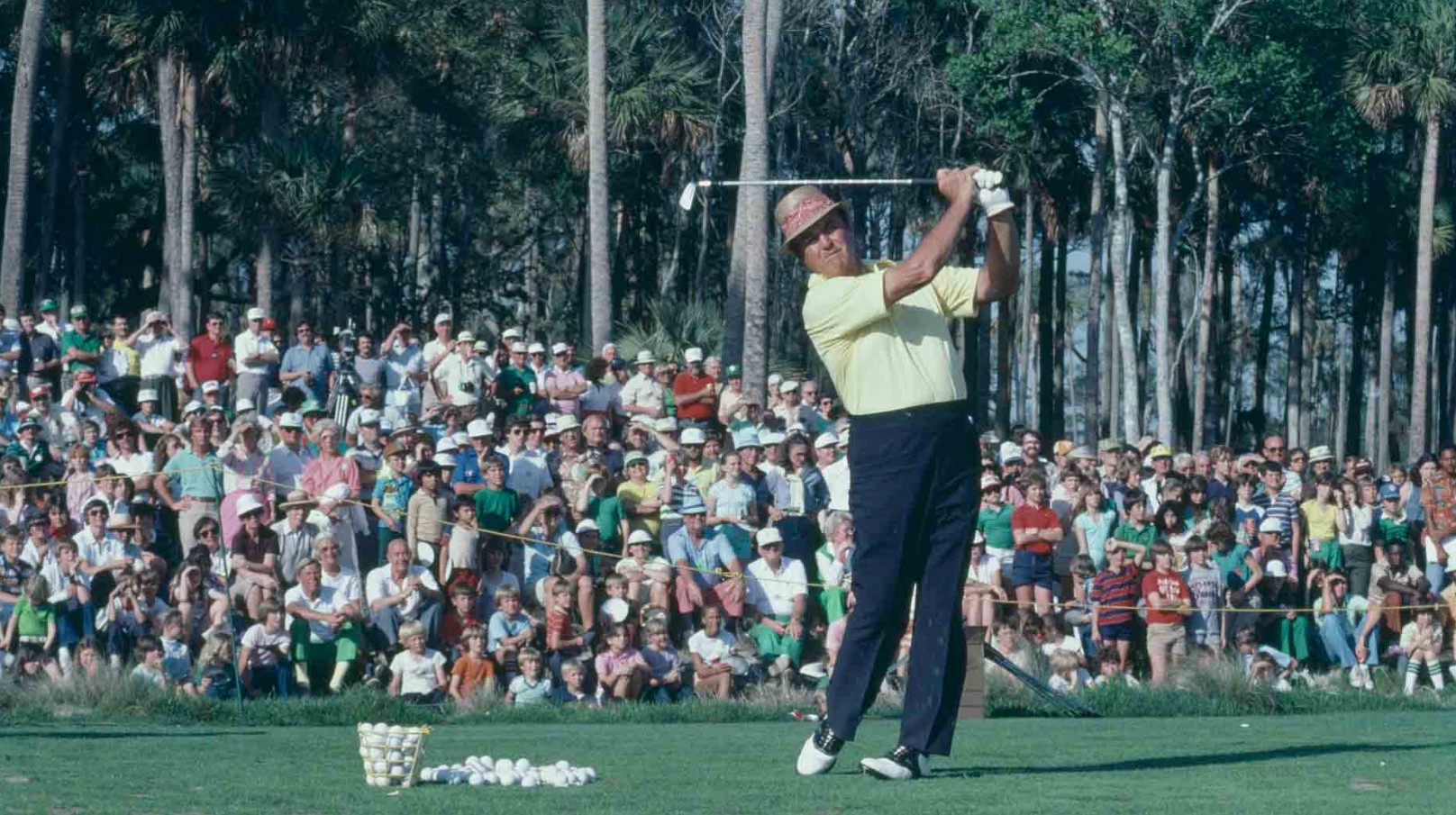
We often find ourselves in awe of professional golfers who can manipulate their clubs to achieve those jaw-dropping shots. One classic tale involves the legendary Sam Snead, who was known not only for his skilfull gameplay but also for his succinct and impactful advice. This story unfolds during a hands-on clinic where the art of the 3-iron was demystified by Snead himself.
The Clinic that Revealed a Golf Great’s Secret
During a prestigious VIP school structured by Golf Digest Golf Schools, tailored for low-handicap players who aspired to refine their skills, Sam Snead was a pivotal figure. It was here at Pinehurst, a sanctuary for golf enthusiasts, that Snead demonstrated the versatile potential of a 3-iron. Addressing an audience of seasoned players, he illustrated how a single club could be adapted to cover varying yardages.
Understanding the Art of Shot Shaping
With an audience member’s probing question about achieving different distances, Snead proceeded to exhibit three different outcomes using the same 3-iron. First, he showcased a high fade that touched down softly on the right-front of the green. Next, a robust, high draw that journeyed further, settling at the back of the green. Lastly, he struck a straight shot that comfortably landed in the middle of the green, flag-high. Each shot, Snead explained, could vary by as much as 25 yards depending on its shaping.
The Challenge of Stopping the Ball
However, the real challenge was unveiled when an attendee expressed frustration at his inability to make the ball stop as Snead did. In response, Snead once more demonstrated the shot, achieving a single hop and stop on the green. But dissatisfaction lingered in the air as the attendee questioned how he could replicate such control.
Sam Snead’s Iconic Response
The dialogue reached its pinnacle when the attendee revealed his 3-iron covered only 150 yards, prompting Snead’s exasperated yet legendary reply. In a mere ten words, he questioned, “What the hell do you want it to stop for?” This response not only emphasized the golfer’s mastery over his tools but also underscored a critical golfing philosophy: understanding and adapting to one’s own capabilities.
Lessons from the Legends
Sam Snead’s approach at the clinic wasn’t just about showcasing his skill, but also about teaching through demonstration. Known for his minimalistic yet effective communication, Snead left a lasting impact by illustrating that in golf, like in life, sometimes the most straightforward responses are the most profound. Through his example, we learn the importance of knowing our equipment, understanding the shots we play, and aligning them with realistic expectations of outcomes based on our skill level.
Frequently Asked Questions (FAQs):
What did Sam Snead demonstrate about using the 3-iron at the clinic?
Sam Snead demonstrated the versatility of the 3-iron by showcasing how it could be used to achieve different shot types, such as a high fade, a strong high draw, and a straight shot. He showed that shaping a shot could result in a 25-yard variation in distance, depending on how the club was manipulated.
What was the key lesson Sam Snead imparted during the clinic?
The key lesson from Snead’s demonstration was the importance of understanding and adapting to one’s own capabilities with the equipment at hand. His legendary response, “What the hell do you want it to stop for?” highlighted the importance of adjusting expectations and embracing the unique potential of each shot.
How did Sam Snead emphasize control over the ball during the clinic?
Snead demonstrated how to achieve precise control over the ball, even making it hop and stop on the green. However, when an attendee struggled to replicate this, Snead emphasized that the control needed to achieve such a shot was a result of mastery and understanding one’s own skills and equipment, rather than mere technique.
Leave a Reply